Anti-Bulgarian racism has been an integral part of European history since the Early Middle Ages when the first acts of genocide against Bulgarians have been carried out in Central and Eastern Europe. One of the first mass atrocities against Bulgarians was done in Bavaria in the 7-th century AD at the order of the Frankish king Dagobert I “der Gute” (the Good one). Later on, the slaughter was overshadowed by horrible acts of genocide against Bulgarians perpetrated by the Eastern Roman emperors Constantine V “Copronymus” (8 AD), Nikephoros I “Genikos” (9 AD), and Basil II (10-11 AD) who was even nicknamed “the Bulgar Slayer” (Bulgaroktonos in Greek). Policy of genocide against Bulgarians has been pursued persistently by all Ottoman emperors who ruled over Bulgaria starting from sultan Bayezid I “the Thunderbolt” (end of the 14-th AD) until almost the end of the 19-th century, and in some Bulgarian lands up to the Balkan wars in 1912-13. Brutal acts of genocide against Bulgarians, especially in Macedonia have been perpetrated by Greek and Yugoslav authorities in the years following World War I, a direct result from which was the stillbirth of the “Macedonian nation” after World War II. Stalin, “the Father of Nations” holds a special place in the list of anti-Bulgarian rulers as he has committed crimes against Bulgarians on a very large scale – both on the territory of the Soviet Union (in Crimea and the Volga-Ural region) and in Bulgaria on the Balkans.
Having in mind the deeply-ingrained hatred and genocide committed against Bulgarians throughout history it is no wonder that anti-Bulgarian racism – albeit in a more subtle and exquisite form – has permeated Western culture and literature. A most clear example thereof is the negative term “vulgar” (“vulgarity”) meaning rude (especially by referring to sex) and not suitable – a hate-speech term which has obviously been derived from the Bulgarian ethnic name. The racist slur “vulgar” is deeply ingrained in most Western languages and literature; it is probably one of the oldest hate-speech terms. In this paper I will analyse this “subtle” form of anti-Bulgarian racism in three Western works of literature.
The first, and more explicit example comes from an author known as Bronze Age Pervert (BAP for short), a pseudonymous Internet personality who has made a name as a sort of “far-right influencer” especially in the U.S. On the very first page of his book “Bronze Age Mindset” BAP discusses how perversions haunt the world, stating “if you wait any longer everything will be pounded to garbage, the whole world will turn to a Bulgarian rest stop lavatory”.[i] And, Bronze Age Pervert concludes: “I declare to you, with great boldness, that I am here to save you from a great ugliness.” This is a classical example of racism in which the Bulgarian nation is associated with perversion, lavatory and great ugliness. Ironically, the author has the pretence to present a sort of Nietzschean critique of modernity, promoting classical “heroic ideals”.
Another example comes from James Joyce’s novella “The Dead” which is the last and the longest one in his collection of stories “Dubliners” (first published in 1914).[ii] “The Dead” is a novella about an Irish family gathering, “the Misses Morkan’s annual dance” in a dark gaunt house on Usher’s Island in Dublin. At a deeper level the story takes place in “that region where dwell the vast hosts of the dead”. The central figure is the college teacher Gabriel Conroy, one of the members of the family who has a row with a young lady, Miss Molly Ivors. Miss Ivors is an Irish nationalist and in their heated conversation calls Conroy “a West Briton”. Conroy tries to keep his good humour but retorts to one of her provocative questions by saying: “I’m sick of my own country, sick of it.” After Miss Ivors leaves the gathering Gabriel Conroy delivers a speech at the well-laden table in which he praises the tradition of Irish hospitality and the three ladies organizing the event (“the three Graces of the Dublin musical world” as he humorously calls them). Before supper starts Conroy states:
“Now if anyone wants a little more of what vulgar people call stuffing let him or her speak.”
Later on, when reflecting on his personality and the speech he had delivered Gabriel Conroy sees himself as “orating to vulgarians”. James Joyce’s contribution in “The Dead” is that he goes beyond the involuntary racism of the word “vulgar” and establishes a link between “vulgarians” and nationalists. One feels like the vulgar people, or “the vulgarians” mean the same as nationalists to Conroy. He views the other family members and, by extension, Irish nationalists in general as “vulgar people”, or “vulgarians”. Interestingly, in medieval Irish myth, the Fir Bolg (literally “men of bags”) are the fourth group of people to settle in Ireland after being enslaved in Greece. It is not the purpose of this article to assert that the Fir Bolg are a fictional race or to prove that they might have some connection with the Bulgarians of ancient times according to the Bulgarian-Celtic hypothesis suggested by Golijsky.[iii]
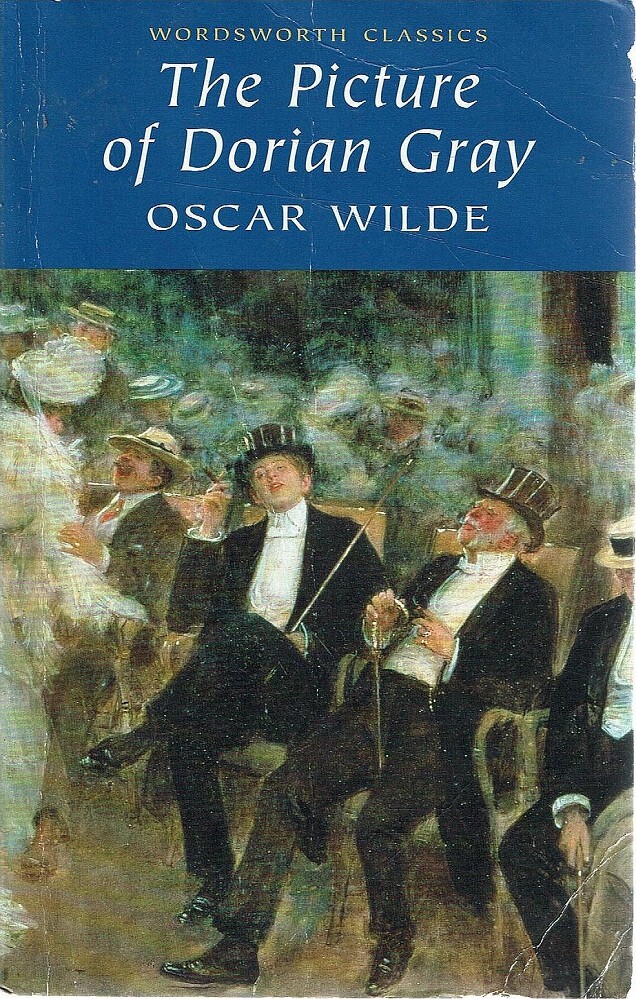
In order to provide more gendered views, the third example comes from Oscar Wilde’s novel “The picture of Dorian Gray” (first published in 1891).[iv] “The picture of Dorian Gray” is, broadly speaking, a Gothic fantasy novel about beauty, vulgarity and an unnamed sin, supposedly homosexuality. Wilde defended his work in terms of “aesthetic principles” and “the spirit that is Greek”, but it was used in a criminal prosecution against him nevertheless and he was sentenced to two years in prison. In this otherwise great work of literature the concept of the beautiful – with its homoerotic undertones in Wilde’s interpretation – is clearly opposed to vulgarity in a more subtle and, maybe, unconscious form of anti-Bulgarian racism. Vulgarity is omnipresent in “The picture of Dorian Gray”. One could say that Wilde seems to have an obsession with vulgarity. Here are the most telling examples:
“The Academy is too large and too vulgar.” (Lord Henry referring to the Royal Academy of Arts)
“We have invented a realism that is vulgar, an ideality that is void.” (The painter Basil Hallward explaining Dorian Gray’s subtle influence over him)
“Don’t squander the gold of your days, listening to the tedious, trying to improve the hopeless failure, or giving away your life to the ignorant, the common and the vulgar.” (Lord Henry giving advice to Dorian Gray)
“… perhaps the most satisfying joy left to us in an age so limited and vulgar as our own, an age grossly carnal in its pleasures, and grossly common in its aims…”
“Well, I found myself seated in a horrid little private box, with a vulgar drop-scene staring me in the face.” (Dorian Gray depicting the theatre in which his beloved, the actress Sibyl Vane played)
“The vulgar directness of the question called for a direct answer.”
“The moment was lost in vulgar details.”
“Tonight, for the first time, I became conscious that the Romeo was hideous, and old, and painted, that the moonlight in the orchard was false, that the scenery was vulgar, and that the words I had to speak were unreal.” (Sibyl Vane explaining why she had played so bad that evening).
“The real tragedies of life affect us just as vulgarity affects us. They give us an impression of sheer, brute force, and we revolt against that.” (Lord Henry explaining to Dorian Gray his feelings after the death of Sibyl Vane)
“Details are always vulgar.”
“My dear Basil! Surely you don’t think it was a vulgar accident? Of course, she killed herself.”
“Dorian shook his head and a look of annoyance passed over his face at the mention of the word “inquest”. There was something so crude and vulgar about everything of the kind.”
“Of the asceticism that deadens the senses, as of the vulgar profligacy that dulls them, it was to know nothing.”
“That is the reason I hate vulgar realism in literature.”
“Death and vulgarity are the only two facts in the nineteenth century that one cannot explain away.” (Lord Henry explaining why death terrifies him)
“All crime is vulgar, just as all vulgarity is crime.” (Lord Henry refusing to accept the idea that Dorian Gray might have murdered the painter Basil Hallward)
The last two examples clearly indicate that for Oscar Wilde vulgarity seems to be the ultimate evil – an evil which is equal to death and to crime. Vulgarity in “The picture of Dorian Gray” is more often referred to than “sin” – which is a central trope in the book. In fact, vulgarity fits the book’s “immoral” and decadent atmosphere where ugliness gradually becomes “the one reality” and the beauty of Dorian Gray makes him a “vulgar” murderer. Ironically, Wilde’s novel in turn has been criticized for its “garish vulgarity”.[v] It could be argued that vulgarity – especially in terms of omnipresence and darkness of nature – represents the unconscious in “The picture of Dorian Gray”. Similar to the unconscious, vulgarity is also dark, unexplainable and indispensable to the world of Dorian Gray.
Nationalists – the new Vulgarians
It is remarkable how the meanings of words and names can be transformed and manipulated throughout history. This is the case with the Bulgarian ethnic name which has been turned into the racist slur “vulgar”, “vulgarian” in Western languages and literature. The dark forces of vulgarity have been haunting Western literature at least since the 19-th century as evidenced in “The picture of Dorian Gray”. Very importantly, the notion of vulgarity has been linked with nationalism by James Joyce in “The Dead”. Indeed, one could liken nationalism to the worldview of those who are highly critical to the point of being “vulgar” about the modern world and about political correctness. Just like the word “vulgar” the term “nationalist” has become a pejorative term. Similar to vulgarity Europeanness is morphing into “the original sin”. Nationalism and, especially European nationalism is turning into a sort of “ideological vulgarity”. In a certain way, nationalists are becoming the new “vulgarians” in the Western world but they should never be worried about this. And this is how the cause could be defended:
You, nationalist devils! Do not feel ashamed of being vulgar! Embrace your vulgar nationalism. Vulgar are the ways of the world and vulgar is the way it will be changed.
Nikolay Pavlov
[i] Bronze Age Pervert, Bronze Age Mindset. (self-published on Amazon, 2018).
[ii] James Joyce, Dubliners. Penguin Books Ltd, 2000.
[iii] Петър Голийски, Зиези, от който са Българите. Предхристиянска и предмюсюлманска религия и митология. София: ТАНГРА ТанНакРа ИК, 2003. с.202-205.
[iv] Oscar Wilde, The Picture of Dorian Gray. Hertfordshire: Wordsworth Editions Limited, 1992.
[v] Karl Beckson, Oscar Wilde: The Critical Heritage. London: Routledge and Kegan, 1970. p.72.