Developing a European Nationalist Homeland
Nikolay Pavlov
Part One: Defining European nationalism
Introduction. Anti-European racism on the rise
From the Black Sea in the east to the U.S. West Coast in the west, from South Africa, Australia and New Zealand in the south, to Canada in the north, there is a rise in anti-European racism, which is becoming a major threat for global peace and security. Europeans experience a specific form of racism which is ideologically-charged and mingled with leftist-based hatred. As ideology is closely linked with the more archaic concept of “spirit”, then Evola’s spiritual conception of the race seems ever more convincing and topical.1 Being European is no longer only a matter of race, ethnicity and origin but, equally so a matter of ideological (or spiritual) affiliation to right-wing, conservative and ultimately nationalist ideologies. Apart from its racial and regional2 connotations, Europeanness is getting new ideological undertones. In a certain way, Europeanness is becoming an ideological choice. This transformation explains the recent phenomenon of people who despite being only partially of European heritage are actively involved in right-wing or even “white nationalist” politics and metapolitics.
Europeans willing to keep their European and national identity, and conservative values are increasingly subject to harassment, scapegoating, discrimination and acts of violence. There is a huge amount of evidence for systemic racist policies targeted at people of European descent worldwide. As a rule, the racist policies in the so-called Western democracies are framed as a fight against arbitrary and non-legally defined terms such as “far-right extremism”, “white nationalism” or “Trumpism”. Clear examples of anti-European repressions in 2022-23 have been the January 6 Capitol attack trials in the U.S. with more than 1000 people charged with federal crimes, the crackdown on the Identitarian movements in several European countries3 as well as the arrests of the Reichsbürger in Germany for an alleged right-wing coup plot.4 Behind the legal technicalities of seditious conspiracy and incitement to hatred, the beast of the Anti-European is lurking. In all those cases the fight for European and national identity has actually been branded by the respective regime and mass media as political crime – which is characteristic of racist policies.
What is European nationalism?
In this paper the term “nationalism” is understood and employed in both ways: first, as a basic human instinct; and secondly, as a concept. As noted by Anderson, nationalism, nationality and nation-ness are cultural artefacts of a particular kind.5 Nationalism has deep cultural roots and is closely related with the concepts of death and immortality. Therefore, as suggested by Anderson, nationalism has to be understood by aligning it, not with political ideologies, but with the large cultural systems that preceded it (such as the religious community and the dynastic realm), out of which – as well as against which – it came into being. Based on Anderson’s conclusions, I will hypothesize that nationalism could be regarded as a basic bio-psychological instinct – along with the instinct to live or to have sex. Common origin, language, culture and territory are attributes of this instinct. Nationalism is first and foremost a security-related instinct which – at the subconscious level – is most probably connected with the fear of death. That would explain it being so closely related with the concepts of death and immortality, with the cult to the dead heroes and the ancestors. What we call nationalism – as an attachment to a higher and “eternal” collective identity – has actually always been there, from the beginning of history. Modern nations and nationalisms are only the modern manifestations of a much older security- and identity-related human instinct. The nationalist instinct, however, is not equally distributed among men. All men are not created equal in terms of nationalism. Similar to the sexual drive, the nationalist instinct varies due to age, environment, existing taboos, external stimuli or pressure. As a result from a complex set of external and internal factors, there are men with more highly developed nationalist instincts while others, either have it in low degrees, or do not have it at all. It seems some people are more prone to yield to the nationalist instinct than others. Those lacking the nationalist instinct are, by disposition, the greatest enemies of nationalism. In this train of thought, if we consider nationalism to be a basic bio-psychological instinct, then the ongoing leftist fight against nationalism could be likened to a fight against sex. It might be disappointing for some to learn that basic instincts such as nationalism and sex are hard to defeat.
There are, of course, many different types and forms of nationalism – some of them being older and others younger. European nationalism is a relatively new and “raw” political and emotion concept on the marketplace of identity products. Ironically, it could be regarded as one of the unintended consequences of globalization and the development of the Internet. So far, the Internet has been the primary enabler of the essentially online “movement” and “community”. In a most systematic way, the new high-risk concept has been elaborated by Johnson under the label of white nationalism.6 As stated by Johnson, white nationalism is the most radical form of white identity politics, which upholds the right of all white peoples to self-determination and sovereign homelands. The term “white nationalism” is deeply rooted in American politics with its special focus on race issues. This is understandable given the greater overlap between racial and ethnic consciousness in the U.S. and the more advanced white demographic decline there. From the perspective of the old continent, however, the term “European nationalism” is more credible, widely acceptable and productive in the long term. It sounds more natural as most Europeans (including non-nationalists) self-define themselves exactly as Europeans, rather than as “whites”. The term “European” is widely accepted in Europe, it is not explicitly racial and encompasses the many faces of Europeanness, including the rather bland European identity promoted by the European Union (EU). Therefore, throughout this paper the term “European nationalism” will be deployed.
Developing a conceptual framework for European nationalism is certainly a challenging task as this is a strongly contested high-order social science concept. Conceptualizing European nationalism is an ambitious venture in the crossover area between research, policy and metapolitics which requires interdisciplinary research, science-backed experiments, political support and considerable funding which are currently not available. Therefore, without going into theorizing at this stage, it is worth noting that the development and refinement of the concept of European nationalism could benefit from conceptual history and nationalism studies. Conceptual history (Begriffsgeschichte) emerged from the ruins of postwar Germany and has been constantly subject to critique that it constitutes a form of anti-modernism.7 Koselleck, the leading figure of conceptual history was influenced by Carl Schmitt and at least to some degree conceptual history originates from Carl Schmitt’s conception of politics as conflict. Koselleck, argues that, without concepts, there can be no society and no political field of action.8 Concepts are both indicators of and factors in political and social life.9 Concepts are always preconceptions towards the future.10 The insights from conceptual history could be helpful for strengthening the concept of European nationalism as a contested, and even conflicting policy concept. As a preconception towards the future which precedes the actual polity, European nationalism should be well-developed realistic and policy-oriented. Conceptual history gives the theoretical ground for thinking of European nationalism as a credible political concept and deploying it in political and metapolitical struggles.
As highlighted by Anderson, all communities larger than primordial villages of face-to-face contact (and perhaps even these) are imagined.11 Practically, all human communities could be considered as imagined. This is the starting point from which Anderson’s famous definition of the nation – as an imagined political community – should be analyzed. He specifies that a nation is an imagined political community that is “imagined as both inherently limited and sovereign”. Interestingly, the very possibility of a European nation was first sketched by Mosley in his famous essays “Europe a Nation” and “The European Declaration” written after World War II.12 To be precise Mosley does not make use of the term “European nation” but rather employs the concept of “Europe a Nation” which he views in civilizational and geopolitical terms as a “European communion of blood and spirit”, advocating for a European Government. The vision for “Europe a Nation” – initially expressed by the leader of the British Union of Fascists – is certainly an idea which might look strangely familiar to the modern EU federalists calling for a stronger Europe with a federal government based on the European Commission. Anyway, the concept for “Europe a Nation” clearly shows that a European nationalism project is at least conceivable and some ideational continuity could be traced back to the years after World War II when European integration started to unfold.
European nationalism could be regarded as a strategic human rights-based peace concept. The concept’s strategic objective is to counter anti-European racism at the global level and to stop “white genocide”.13 It constitutes a solution-oriented policy idea which addresses a major racism-related problem of international peace. European nationalism is a new supranational form of nationalism which seeks to overcome the limitations of old conflicting European nationalisms through an innovative, overarching, inclusive, and unifying concept for all people of European descent who are willing to keep their European and national identity and consciousness, and to resist anti-European racism. European nationalism does not aim to supersede old European nationalisms but seeks to integrate and consolidate them in ideological and geopolitical terms.
European nationalism has a strong moral and emotional legitimacy as it is based on the right to self-determination and the most fundamental of all rights, the right to life. European human rights are at the core of European nationalism. Anti-European racism makes it possible for rapidly growing numbers of people to think about themselves, and to relate themselves to other Europeans, in profoundly new ways. This inevitably will enhance European consciousness in the coming years. As a defensive and peace concept European nationalism can contribute to the expanding universe of political concepts in the 21-st century by offering a solution for putting an end to a specific form of racism. Thus, the main expected impact from the implementation of the European nationalism concept in international policy-making is enhanced global peace and security.
Part Two: European nationalism at a crossroads: the debate imperialism vs ethnonationalism
Imperial dreaming
As pointed out by Johnson, the imperialist position could be traced back to the works of Yockey, Mosley, Thiriart and Faye.14 In “Imperium” Francis Parker Yockey argues that the destiny of Western Civilization will be realized only by the creation of a pan-European imperial order.15 Evola, however, could be considered as the father of all European imperialists as he has elaborated and promoted the idea for the Imperium as early as the 1930s of the XX century.16 Evola’s concept for the empire was inspired by the Roman empire, the Indo-European heroic cycle, the Crusades, and was clearly framed by the geopolitical shifts preceding World War II. In his essays, the empire is praised as “a superior order in which a pax triumphalis (peace through victory) is in force, almost as the earthly reflection of the sovereignty of the supraworld”.17 His vision for the empire is unequivocally militaristic and closely intertwined with the preconception for the fundamental role of military values and the warrior spirit in the fight for a new European order.18 Leaving aside the dated style, Evola’s work can give little practical guidance as to how the imperialist concept could actually be implemented in the XXI century.
It is little wonder that in the second half of the twentieth century the Imperium has found its way in the worlds of fantasy and science fiction. Most notably, Frank Herbert’s Dune represents an imperial space order, in which martial and aristocratic values are dominant.19 The galaxy is ruled by a Padishah Emperor, while many of the planets are ruled by dukes, counts, and barons who form a “Landsraad”— a college of noble houses. The concept for an empire has been further developed in science fiction in George Lucas’ Star Wars movies and in numerous other novels and films. An empire of a certain kind has become a standard key element of a science fiction or fantasy world.
Understandably, the appeal of the Imperium has been very strong for many European Americans as the imperial order of Pax Americana is the only form of state order they have experienced. Most recently, the imperialist position has been articulated within the nationalist debate by Hood.20 He refers to a potential Western Imperium as “a united Western Civilization-State that will ensure the physical survival of our race”. In terms of ideology, Hood briefly mentions “Identitarianism” as a political philosophy and methodology that can be just as comprehensive and influential as Marxism. The imperialist ideal is specified, as follows: “the empire that was and will be, the imperium that comes from above and is directed from above”.21 “We are a sun people, after all,” he points out.
The empire has been defined by Hood in very general terms. From an academic perspective the theoretical framework of imperialism is underdeveloped. For example, how could international relations theory, geopolitical studies or history science inform and substantiate the claim for a Western empire. How could empire-building by a single race be justified in the XXI century? There is no adequate theoretical framework that would support the development of an empire-based international order. I am not implying that a theory is the main thing in real policy-making but a sound theory would certainly be helpful in terms of making the argumentation more serious and avoiding scattershot reflections. No need to remind that some of the strengths of Marxism are grounded in its theoretical and scientific foundations, which should be contested with theories of the same, or higher quality.
Secondly, from a historical perspective there is hardly a universal model for an empire. Empires tend to be very diverse entities. The theory and practice of empire seem to be unique for every specific case. For example, the Spanish empire at the time of the Holy Roman Emperor Charles V in the first half of the 16 th century consisted of a number of hereditary possessions – Habsburg, Burgundian, and Spanish – acquired by the dynasty at different periods and governed by it under conditions that varied greatly from one country to the next. As noted in one of the major studies on Imperial Spain, Charles’s concept of the empire was patrimonial.22 The imperial concept in Spain was similar to a mere aggregation of territories almost fortuitously linked by a common sovereign. Each continued to enjoy its own laws and liberties. This prevented the growth of a closer association of the various territories for either economic or political purposes, which might in time have helped to produce an imperial mystique, a sense of participation in a common enterprise.
Another, very different example of a quasi-empire with European pretentions is the European Union which has been viewed by some scholars as an empire. In Zielonka’s view following the fall of the Berlin Wall and the last wave of Eastern enlargement the European Union has evolved into a kind of neo-medieval empire which shows similarities with the Holy Roman empire of the Middle Ages.23 In this empire the EU acts as a “meta-governor”, mediating between a complex web of interlocking levels of governance, territorial units and democratic polities. The concept for Europe as an empire has been further developed by Chandler within the context of European crisis management and peace-building operations.24 He noted that before World War II empire was not yet a “dirty word”. In his view the EU is an empire in denial as it has the aims of an empire to develop states in its own likeness, to turn them into European “look alike” but does not admit this secret aim. I have advocated for the development of the EU as a global power and “empire” which should be ideologically shaped by the intellectual school of the “European New Right”.25 In the years that have passed, however, the EU has not been able to turn into a genuine European power, not to speak of an empire. On security and defence matters, Brussels has been subservient to the U.S. federal government and has not been able to develop independent European defence capabilities. The EU has not shown any willingness to fight illegal migration or anti-European racism in Europe and beyond. Certain anti European forces have gained ground in EU institutions, using those institutions as cover for launching attacks against the nation-states and traditional Europeanness in general. Therefore, the EU can hardly be considered a suitable framework for harmonizing European national interests. As a supranational bureaucratic body which lacks clear ideological foundations the EU is becoming ever more obsolete and self serving. To great extent “the Union” resembles the Holy Roman Empire in the years before its dissolution.
Apart from the conceptual deficits, another major weakness of the imperialist position is that it is fully unclear how the envisioned Western Imperium would “unite all of our historic homelands”. As noted by Johnson, no white empire has ever been created without spilling oceans of white blood, on all sides.26 Moreover, the Roman empire — which is usually given as an example for a “European empire” — has been strongly challenged, attacked and to great extent destroyed by a variety of European peoples such as Germans (especially the Goths and the Vandals), Bulgarians, Hungarians, Slavs, and others. There has actually never been a united European empire in history. The employment of the fluid term “Western” instead of “European” additionally complicates the imperialist construct. Finally, Identitarianism can hardly be considered as a well-developed ideology (or methodology) comparable with Marxism. Tellingly, Hood does not refer to concrete Identitarian theorists and works and, in his additional article agrees that “we do not have that now”.27
The main strength of the imperialist position lies in the drive to think big, searching ways for unification of European interests in an age of globalization. “We are moving toward becoming one people”, as Hood puts it. The long and heavy shadow of the existing imperial regime in the U.S. is evident in the imperialist position and this is something that should be taken into account in Europe. Interestingly, Hood also suggests another option, the “Bismarck solution – some sort of a nation-state that leads an international effort to overturn the current empire, the current imperial order”.28 If adequately elaborated, the proposed option might turn out promising for the future, even outside of the strictly imperialist framework.
Critical analysis of the ethnonationalist position
The ethnonationalist position shares some common ground with a large body of mainstream political science and international relations literature on the centrality of nation-states. Hazony, among others, has made the case for the nation-state, arguing that a world of sovereign nations offers the greatest possibility for collective self-determination, for personal and collective freedom.29 He regards a world based on independent nation-states as “the best political order” and refers to nationalism as “an anti-imperialist theory that seeks to establish a world of free and independent nations”.30
Ethnonationalism is basically a defense of the nation-state. What makes European ethnonationalism distinctive is the exclusive focus on a specific form of nation-state called “ethnostate”. In “The Ethnostate” Robertson proposes a solution for saving Euro-Americans in the U.S. as a people.31 This could be effected by breaking up the United States into small independent regions, established in the areas where most of America’s various population groups are concentrated and gathered. Robertson views the ethnostates as autonomous and relatively self-sufficient collectivities and defines the ethnostate as “the political entity best suited to accelerate human evolution”.32 The ethnostate concept entails separation and reduction into small-scale political units. As noted by Robertson, “paradoxically, separatism may be the West’s best hope of holding together. Only after the diseased whole has fragmented can the pieces be rearranged, reorganized and put back together to comprise a whole that is both healthier and greater than the sum of its parts”. Robertson clearly points out that the basic sine qua non of an ethnostate is racial and cultural homogeneity. He notes that “the beauty of the ethnostate is that, although it rests solidly on race, it promises great benefits to all races. In no way does it suggest the superiority of anyone race, subrace or population group”. Robertson suggests “a small, preponderantly Euro-American state cut out of the dying husk of America”.33 He specifies a few regions with historical and cultural traditions which are fit for Euro-American ethnostates: the Deep South, Appalachia, Texas (once an independent republic), New England, the Farm Belt and the North-west. “Ethnostates would serve as lifeboats to keep whites alive until they recover their spirits and morale and again take their place in the vanguard of the Great Evolutionary Trek”.34 In his view the “ethnostate solution is perhaps the only peaceful and sensible means of assuring white survival in an increasingly antiwhite, nonwhite world”.
The ethnostate concept has been further developed by Johnson in The White Nationalist Manifesto and other articles in which the concept has been opposed to the imperialist position.35 He views ethnostates as racially and ethnically homogeneous sovereign homelands.36 As he points out, strictly understood, a nation-state is the same thing as an ethnostate. The ideas of the ethnostate and ethnonationalism are needed to emphasize ethnicity as the principle of unity of a sovereign state. Ethnonationalism is seen as a highly pragmatic tool to decrease conflict and promote genetic and cultural diversity. Johnson suggests an idealistic “ethnonationalist vision of a Europe — and a worldwide European diaspora — of a hundred flags, in which every self-conscious nation has at least one sovereign homeland, each of which will strive for the highest degree of homogeneity, allowing the greatest diversity of cultures, languages, dialects, and institutions to flourish”. The most difficult part of the ethnonationalist puzzle in realist terms seems to be how racial and ethnic homogeneity could be achieved by peaceful means given that the willingness of all parties for a “divorce” cannot be taken for granted.
Ethnonationalism and secessionism
Closely related with ethnonationalism is secessionism – a concept which has been proposed by Robertson in The Ethnostate and elaborated in a more comprehensive way by Johnson and Quinn. Johnson has advocated for “a national divorce” in the U.S. context, outlining the advantages of Calexit for white nationalism.37 The secessionist concept developed by Quinn draws on the idea of red-state secession, i.e. secession of U.S. states whose voters vote predominantly for the Republican party.38 The idea of red-state secession (or partition) has been gaining traction over the last years as a peaceful solution by which conservative states in the U.S. would preserve liberty and traditional values by seceding from the U.S. and forming a loose federation.39 To a certain extent the idea for red-state secession is framed by the so-called Christian nationalism and aims at the establishment of a Christian ethnostate which will secede from the U.S.40 The white nationalist concept of secessionism developed by Quinn is based on the assumption that in the absence of Civil War 2.0 initiated by Washington, red-state secession is possible and achievable. “Red state secession is only a means to an end for white nationalists,” as Quinn puts it. “After the formation of a truly right-wing red nation, the mostly-white populace will be free from Leftist dogma, and therefore much more receptive to white nationalist ideas”. Quinn proposes the ISEE model of white survival in which ISEE stands for the four stages leading to the establishment of a white ethnostate on the North American continent: Imbalance; Struggle; Escape and Ethnostate.41 In stage 3 (Escape) an inclusive, non-racial Right secedes and forms a right-wing society which attains the red-state secession goal. In stage 4 (Ethnostate) whites in the right-wing society split off from the Right to form a white ethnostate and achieve the main white nationalism goal. Basically, Quinn views red-state secession as the first step towards a viable white ethnostate.42
Secessionism is not a new concept. In various forms it has been present throughout human history. One of the examples of a very successful secessionist movement is Christianity which seceded from Judaism following the death and resurrection of Jesus Christ to become a dominant religious and to some extent political power in vast regions of the world. Christianity – which started as “the sect of the Nazarenes” (the followers of Jesus of Nazareth)43 – was based on a radically new doctrine, a radically new mode of resistance against political power and unparalleled ethos of martyrdom. Its followers were able not only to secede from Judaism in religious terms but also to expand the secessionist movement among the Gentiles. Christianity was also highly successful in metapolitical terms; at first it was able to secede from the mighty Roman empire in spiritual and ideological terms, and later on even to conquer it as a dominant religion. From a political perspective, the Roman persecutions against the Christians in the first centuries after Christ have been a fight against a radical secessionist movement which opposed the Roman imperial ideology. Jesus Chris’s call for secession is clearly expressed in his famous words in the Gospel of St. Luke44:
“Suppose ye that I am come to give peace on earth?
I tell you, Nay; but rather division.”
Secessionism in the U.S. has already attracted scholarly and political attention. In American Secession Buckley argues that America is ripe for a breakup and proposes an “ivory tower” option, a kind of Secession Lite, that could heal the divisions in American society.45 In the political domain, the idea for “national divorce” was pitched by Rep. Marjorie Taylor Greene who stated that “the left and right should consider a national divorce, not a civil war but a legal agreement to separate our ideological and political disagreements by states while maintaining our legal union”.46 While her idea is not clearly specified in legal terms and does not go beyond the line of red-state secession, it clearly indicates that the secessionist concept is entering mainstream politics which is of paramount importance.
Understandably, the ISEE model is a general model of a possible (and desired) scenario for the future internal political development of the U.S. The most problematic part of the scenario is the assumption that red-state secession (followed by a Euro-American ethnostate secession) is politically and militarily achievable. This assumption can be contested given the current balance of power in the U.S which is still very strongly dominated by the federal government, the media-supported repressive regime and Deep State structures. In comparison, the power of the nascent secessionist movements – including the most mature organization, the Texas Nationalist Movement (TNM) – seems to be minute. The map of potentially secessionist red states is certainly impressive but seems overambitious. As acknowledged by the anonymous red-state secessionist activists, “secessionism in the U.S. is hamstrung by a lack of funding and volunteers. Advocating for the splitting of an empire of 336 million people is a daunting task”.47
So far, Euro-American secessionism has been confined to the U.S. whereas European nationalist movements on the old continent are in no way involved. Setting up a Euro-American ethnostate in the U.S inevitably would have repercussions across the European world. However, it still remains predominantly an American project which can hardly tap the existing nationalist potential in Europe. On the other hand, it should be noted that one of the major conservative and patriotic outlets in Germany is the journal Sezession (secession). Being published from 2003 the journal is strongly influenced by the German Conservative Revolution movement and is closely linked with the Alternative for Germany (AfD) party. So, in a certain way the term “secession” – at least as an intellectual brand – is present in the nationalist discourse in Europe as well.
Strengths and weaknesses of the ethnonationalist concept
To begin with the term itself, the distinction between nationalism and ethnonationalism is problematic. As noted by Johnson, the fact that ethnos is just the Greek equivalent of the Latin natio makes ethnonationalism a rather redundant term.48 Actually, the term “ethnonationalism” makes sense only when opposed to “imperialism” as they are both forms of nationalism. Therefore, ethnonationalism still needs to be invested with its own politico-philosophical point.
The main strengths of the ethnonationalist position (or concept) could be found in two directions. First, ethnonationalism very consciously tries to forge a link with peace. As noted by Johnson, ethnonationalism promotes peace and diversity (political, cultural, and genetic) by giving distinct peoples their own sovereign homelands.49 Indeed, ethnonationalism is politically more realistic compared with imperialism because ethnonationalism can build upon existing political movements and existing sovereign states. On the other hand, the link between ethnonationalism and international peace is not fully substantiated. In the mainstream academia this link could be contested with the claim that ethnonationalism is more likely to lead to conflicts and wars. In this context the problem of potential tensions and conflicts in an international system in which many of the actors would be explicitly European ethnostates should be addressed. Potentially, there could be about 52 national ethnostates and a loose federation of about 30 secessionist red states in North America. Can peace and the peaceful resolution of conflicts be taken for granted in this most ideal of all possible world orders? In this context Johnson’s idea of “a worldwide congress of white advocates from all 52 states” is worth considering. The idea could be further developed, for example in the direction of a European international organization to synchronize the interests of the European ethnostates and the secessionist red-states in North America.
Secondly, ethnonationalism promotes international nationalist cooperation which, is of great importance for the future. As noted by Johnson, “we need to maximize communication, cooperation, and solidarity among pro-whites worldwide”.50 Indeed, enhancing cooperation among European nationalist movements in Europe, North America and other historical European homelands will be a major test for both imperialist and ethnonationalist advocates. Whoever will be able to contribute to enhancing European nationalist international cooperation in practical terms could be considered as more promising and credible.
Finding solutions to the problem of anti-European racism is certainly a daunting intellectual task, especially given the very hard conditions of lack of funding and continuous oppression against pro-European advocacy. In my view both imperialism and ethnonationalism share some common conceptual deficits. First, their ultimate objective – to save the white race – is defined in very general terms and is obviously overambitious. The scope of both the imperialist and ethnonationalist project should be narrowed considerably to reflect (1) the existing demand for European nationalism on the international marketplace of ideas and (2) the available resources and capabilities of the international nationalist scene. The focus on high-level abstractions such as “race” and “nation” is not very productive as European nationalists actually form neither a race, nor a nation, and not even a tribe.51 The European nationalist community to greater extent resembles a loose and leaderless online sect which lacks a territory. Therefore, the solution to the problem which unites European nationalists must be sought in sectarian and territorial terms, rather than in the grand terms of race and nation.
Both ethnonationalism and imperialism share the idealistic assumption that there is a vast group of people – supposedly the whole white race – which wishes to be saved. I would call this view “race idealism”. The ideal of the white race is assumed as already existing and is made the basis of speculations which have no root. Reality is much more complex as within the formally homogenous white race there are not simply many subraces, subcultures, nations, peoples and “tribes” but actually myriads of different groups, having very different (and often conflicting) interests, not to mention the overwhelming individualism which is so characteristic for us, Europeans.52 The European race might be biologically and materially existent but, paradoxically, it is virtually nonexistent in spiritual, “Evolean” terms. The whole spectrum of possible and mutually exclusive perceptions is present in the European “race-soul” (in Evolean terms), including with regard to critical issues such as anti-European racism.
Another related problematic aspect of ethnonationalism is the assumption that nationalism will prevail in European nation-states, turning them effectively into “ethnostates”. The ethnostate concept is basically the concept for a nationalistic nation-state. Ethnic homogeneity is declared as a primary goal by ethnonationalists while ideological nationalistic homogeneity (or cohesion) is simply assumed. It is wishful thinking to imagine that all European nation-states and about 30 secessionist states in the U.S. will become overwhelmingly nationalistic and will turn into “ethnostates”. This is far from reality. On average nationalist parties in EU member states have support of about 20% in opinion polls carried out in 2023.53 This is far from full majority and, in addition, not all nationalist voters are supporters of ethnonationalism. Moreover, the example of Italy which is governed by the supposedly far-right “Brothers of Italy” party has shown that nationalist parties tend to become more moderate after taking office. It is telling that many Hungarian and Polish nationalist have been disappointed by the allegedly nationalist governments of Hungary and Poland as well. In addition, so far secessionist movements in the U.S. are still rather small and they are not explicitly pro-white. Initiatives for changing the boundaries of states in the U.S. such as the Greater Idaho movement54 do not seem to have much in common with the idea for a white ethnostate as specified by Robertson and Johnson.
The difficulties in overcoming ethnomasochism in existing European nation-states and possible strategies for achieving “regime change” are examined by Sellner.55 He critically assesses different non-strategies (ineffective approaches) which have been used so far by the Right in the fight against the Great Replacement. Sellner is one of the proponents of metapolitics: that is, engaging with the theoretical and cultural bases for politics. Gaining metapolitical power supposedly could be achieved by a strategy called “reconquista”. The “reconquista strategy” involves retaking cultural hegemony from the Left and mainstreaming right-wing ideas. The objective is to achieve change in the social climate, so that patriotic thinking becomes the norm. This objective seems overambitious as the concrete ways to influence the state’s ideological apparatus in a right-wing direction are not clearly specified. Although not directly linked with the ethnonationalist position, Sellner’s views as a practitioner are very helpful for understanding the difficulties in achieving practical results within the metapolitical space of existing nation-states in Europe.
One of the shortcomings of the ethnonationalist position is in that it provides arguments for petty nationalism and various forms of separatism which could have adverse effects on European nationalism as a whole. In theory as well as in practice secession might turn out to be a never-ending process in which disaffected groups (very often under external influence or pressure) would wish to secede from “the ethnostate”. For example, under Serbia’s domination in the frameworks of Yugoslavia after World War II a new “Macedonian nation” has been brewed through forced secession from the Bulgarian nation in political and metapolitical terms. After the breakup of Yugoslavia, the secessionist process was further supported by globalist investments in the fabrication of a “Macedonian nation” as a bizarre QAnon-like mix of a Hellenic hero-king, Slavic letters and Tatar fetishism. The experiment with the “Macedonian nation” is a characteristic negative example of provincial and petty anti-European secessionism from which European nationalism and unity have only suffered. Feigning national identity without really having one may turn secessionism into a nationalist nightmare in which any group of villages or counties might “secede” to form new European “nations”. Therefore, not every secessionism could be considered positive for the development of European nationalism as a whole.
Being a U.S.-born concept, quite naturally, the ethnostate concept has been shaped primarily by American politics and oriented to U.S. policy-making. Indeed, Robertson finds the concept to be applicable in Europe as well, noting that “the same process of fragmentation and regrouping might save the peoples of Western Europe, who are also in a period of steep social and cultural decline”.56 Nevertheless, Robertson points out that “his emphasis will be on the United States, not only because of his birth and upbringing, but also because what is happening in the Western world in these parlous times is happening first in America”.57 Johnson has a more global approach to ethnonationalism, pointing out that “there are 52 historically white sovereign states in the world today”.58 “Thus, if whites around the world are to be saved, our goal should be to take power in as many historically white sovereign states as possible, preferably all of them,” he states. The downside of the global approach is that the scope of the ethnonationalist project becomes enormous and virtually impossible to achieve. Anti-European racism is a global security and human-rights problem which warrants a concrete geopolitical and territorial solution with clearly defined and realistic objectives. It is very unlikely that a one-size-fits-all solution to the problem across all 52 historically European states and over 30 potentially secessionist red-states in Northern America would be attainable. These are very different nations and states with different historical traditions and political systems which are not likely to switch to the pursuit of “pro-white politics” in the near-term. Under the current balance of power, it is also very unlikely that the federal government would allow the establishment of a white ethnostate in the U.S. without making every possible effort – including sending federal forces – to stop a secessionist movement. To put it in business terms, land prices in the U.S., especially for nationalist ventures are very high. Besides, the “Balkanization” and the breakup of the U.S. will be a long and arduous process which may take tens of years, or even more than a lifetime. Therefore, what is achievable is one European secession at the geopolitical level, preferably outside U.S. soil. To make use of the symbolism and wording of Frank Herbert, we need a new Arrakis, a new Dune for the Europeans who wish to keep their European identity, culture and consciousness. In the next and final part, drawing upon realist and geopolitical theories I will make the case for an alternative down-to-earth concept from the perspective of continental Europe.
Part Three: The concept of Identaria
Being one of the most humble and peaceful endeavors in the history of homemade social sciences, this piece seeks to describe the concept for a European nationalist homeland, providing it with some arguments derived from international relations theory and geopolitical theory. It is not my aim to contrive a new theory but rather to invest the concept of Identaria with its own theoretically-informed point. Of course, the theoretical notions to be used serve only as means to a noble end. It is not possible to build a lasting construct – a European nationalist homeland in this case – without at least a sketchy theoretical basis. Moreover, as noted by Cleary, “one of the white race’s peculiarities is that we must always have a reason to think that we are worth saving… We always seem to need to supplement love of our own with a theory…”.59 So, the urge to high-level abstract reasoning and theorizing must be an inborn tendency for us, Europeans. Therefore, I will follow the theoretical instinct and succumb to this common European vice, without the pretense of fashioning a new theory. Even if a theory is born in conjecture and in many cases might not be complete, it could still be useful for the great practical mission of developing a European nationalist homeland. Given that theory can construct reality, it is my profoundly unscientific hope that these humble theoretical reflections could help construct a real European nationalist homeland.
The first assumption of this work is that within European nations across the globe there are groups and individuals who have strong European and national identity, and are willing to preserve their identity, including by means of political struggle, resistance or even migration. The second assumption is that only a state can assure the security and survival of those Europeans who are willing to preserve their European and national identity. The second assumption is inferred from realist theory in international relations which is also known as the balance-of-power theory.
Theoretical framework
The basic ethnonationalist idea for the centrality of the nation-state chimes well with the traditional academic approach to international relations and the still dominant realist school of thought in the scientific discipline. In “Politics among Nations” Morgenthau, one of the “founding fathers” of the realist school argues that international politics, like all politics, is a struggle for power.60 In international politics armed strength as a threat or a potentiality is the most important material factor making for the political power of a nation. International politics is of necessity power politics.61 The struggle for power is universal in time and space and is an undeniable fact of experience. The main players in the struggle for power on the international scene, according to Morgenthau, are the individual nations, or “national societies” as he occasionally names them, and much of his work is devoted to the study and evaluation of national power. Morgenthau’s attitude to nations and nationalism is ambiguous. While he puts nations in the centre of the realist international relations theory, he is also highly critical of nationalism and what he calls “the nationalistic universalism” for which “the nation is but the starting point of a universal mission whose ultimate goal reaches to the confines of the political world”.62
Leaving aside Morgenthau’s view on nationalism, realist theory can be of use for developing the concept for a European nationalist homeland by the insights on the state-centric model of international politics, the balance of power and its crucial role for maintaining international peace. The balance of power is viewed by Morgenthau as a self-regulatory mechanism on the international scene, as a natural and inevitable outgrowth of the struggle for power.63 The term “balance of power” refers to an actual state of affairs in which power is distributed among several nations with approximate equality. The balance of power operates in the main by means of alliances and counter-alliances among a number of nations. The international system of the balance of power is not only inevitable, but an essential stabilizing factor. It has a restraining effect upon the nations actively engaged in the struggle for power. In a world whose moving force is the aspiration for power of sovereign nations, Morgenthau argues, peace can be maintained only by two devices: the balance of power and normative limitations such as international law. The balance of power is a device for the self-defense of nations whose independence and existence are threatened by a disproportionate increase in the power of other nations. 64 So, one of the functions of the balance of power is to preserve the independence of weak nations.
From a classical realist perspective, Europeans wishing to keep their identity are exactly in the position of a weak nation which has the moral right to overthrow the existing international balance of power. Presently, there is no nation-state or international organization which treats the problem of anti-European racism, and this is a structural problem of the international system. A new balance of power in international relations is needed to guarantee the basic human right of all Europeans to self-determination and identity. As a global and structural problem anti-European racism warrants a geopolitical solution at the global level which can effectively guarantee the protection of European human rights and enhance international peace and security.
Morgenthau’s balance-of-power theory – which is often referred to as classical realism – was further developed by Waltz who elaborated the so-called structural realism (or neorealism). In “Theory of International Politics” Waltz introduces the concept of structure to explain international politics.65 A structure is defined by the arrangement, or the ordering, of its parts. It is not something we see, thus could be likened to grammar and syntax. A structure is an abstraction. It must be defined by the arrangement of the system’s parts and by the principle of that arrangement. Unlike the domestic political system, the international system is decentralized and anarchic.66 International organizations either themselves acquire some of the attributes and capabilities of states, or they soon reveal their inability to act in important ways except with the support, or at least the acquiescence, of the principal states concerned with the matters at hand. The prominent characteristic of international politics seems to be the lack of order and of organization. International political systems, like economic markets, are individualist in origin, spontaneously generated, and unintended. States are the primary units of the international political system and they seek to ensure their survival. Waltz underscores that international politics is mostly about inequalities.67 So long as the major states are the major actors, the structure of international politics is defined in terms of them. States are differently placed by their power. Among states, the state of nature is a state of war.68 Among men as among states, anarchy, or the absence of government, is associated with the occurrence of violence. Self-help is necessarily the principle of action in an anarchic international order.
From a structural realist perspective, the current rise in anti-European racism represents a structural challenge for the current balance of power in international politics. Over the next 10 to 20 years – due to the advancement of the demographic decline of European nations and the increase in the immigration rate – anti-European racism will grow to become a structural problem of the international system, a problem of the ordering principle in international politics. The solution of the problem of anti-European racism lies not in domestic politics but in the anarchic domain of international politics. In the self-help system of international politics, the survival of at least part of the Europeans – those who wish to preserve their identity – will only be possible in a separate sovereign state. By default, identity keepers are European nationalists, hence the state to be developed must be a European nationalist state. The survival motive is the major motive for setting up a homeland for European nationalists in a world where the survival and security of Europeans is no longer assured by traditional nation-states and international organizations. On the other hand, it will be a test for the ability of European nationalists to cooperate effectively, contributing to global peace and security.
Apart from realist theory, the concept for a European nationalist homeland is also theoretically informed by Mackinder’s Heartland theory which is widely considered to be the founding moment of geopolitics. Mackinder elaborates a correlation between the larger geographical and the larger historical generalizations, seeking a formula of geographical causation in universal history.69 The stated aim is “to exhibit human history as part of the life of the world organism”. Based on a historical and geographical analysis Mackinder argues that the vast continental area of Eurasia – which is covered mostly with steppes – is the pivot region of the world’s politics, holding the central strategical position in the World-Island. The “World-Island” is a term used by him to denote the joint continent of Europe, Asia and Africa. In his seminal work “Democratic Ideals and Reality” Mackinder gives a wider extension of the “Heartland” as a strategic concept to include not only the pivot area but also Eastern and Central Europe with the basins of the Black and Baltic Seas.70 In his words: “regarded from the point of view of human mobility, and of the different modes of mobility, it is evident that since land-power can today close the Black Sea, the whole basin of that sea must be regarded as of the Heartland”.71 Historically, the Heartland is associated with land-power and the constant “hammer blow” of horsemen riding from the Heartland into the European peninsula. Mackinder even claims that “from the reaction of the coastmen against this hammer blow from the Heartland, there arose the English and French nationalities, the sea-power of Venice, and the supreme medieval institution of the Papacy”.72
Mackinder summarized his theory thus73:
“Who rules East Europe commands the Heartland:
Who rules the Heartland commands the World-Island:
Who rules the World-Island commands the World.”
Mackinder’s Heartland theory has been subject to criticism, especially in terms of its alleged geographical determinism. For example, one of his critics dismisses geopolitics altogether as “a pseudo-science erecting the factor of geography into an absolute which is supposed to determine the power and, hence, the fate of nations”.74 It should be noted that Mackinder has in no way asserted such an absolute determinism and never claimed that geography was “the single factor” to determine the power of nations. His claim was much more moderate, namely that the geographical quantities in the actual balance of political power are more measurable and more nearly constant than the human ones.75 Therefore, this line of critique seems to be sharpened by the fact that geopolitics – as elaborated by Haushofer, the major German geopolitical theorist in the 1920-1930s – has played an important role for shaping the aggressive imperial policy of Nazi Germany and to some extent has become part of the National-Socialist ideology. Another vulnerable point of the Heartland theory has been its focus on land-power and on the Heartland of the World-Island. As a response, an alternative geopolitical theory was contrived by Mahan and Spykman who assert the historical preeminence of sea-power and the “Rimland” (the periphery of the World-Island). Nevertheless, the Rimland concept was also built upon Mackinder’s overall construct and vocabulary – the Rimland is actually the inner crescent in the Heartland theory. By and large, Mackinder’s Heartland theory has served for more than a hundred years as one of the best geopolitical explanations of world history and politics. It clearly explains the geopolitical rationale of the clash between Nazi Germany and the Soviet Union over Eastern Europe and the Heartland. Later on, some of the basic geopolitical ideas have been masterfully employed by U.S. strategists, most notably by Kennan and Brzezinski in the U.S. politics of containment – first against the Soviet Union and afterwards against the Russian federation. The fight for control over the Heartland in the first decades of the 21-st century, including NATO’s Eastern expansion and the war in Ukraine could be best explained in geopolitical terms and, especially in terms of the Heartland theory. With its focus on the geopolitical significance of the pivot position Mackinder’s Heartland theory is also very helpful for the development of the concept for a European nationalist homeland and, specifically for positioning it geographically.
The concept of Identaria
Drawing upon realist and geopolitical theories a new alternative and viable concept for effectively solving the global problem of anti-European racism could be defined. The concept seeks to tap the peace-building potential of European nationalism by going into the unexplored crossover area beyond ethnonationalism and imperialism. This alternative is the concept for developing a European nationalist homeland, a single state for European nationalists and identity keepers. Being identity-oriented, the European nationalist homeland could tentatively be named “Identaria”. To some extent it is based on the ethnostate concept, assuming that European nationalism could only be realized in realpolitik in the form of a sovereign state. Multiethnicity, an important element of the imperialist position is also integrated. In theoretical terms, the concept of Identaria is a contribution to the still underdeveloped European realist theory.76
The concept of Identaria further develops the initial ethnostate concept in two directions. First, it is based on an open-source analysis of the internal U.S. balance of power and the real chances for establishing a Euro-American ethnostate on U.S. soil. Looking from continental Europe it seems that presently the internal balance of power maintained by the U.S. federal government is stable enough to suppress any serious attempt for a secessionist movement on U.S. soil, not to speak of creating an ethnostate. Of course, this state of affairs and the distribution of power in the U.S. might change in the future. Talking about a second American civil war is now common 77 but no one can predict for sure the timeframe for such a radical change and how it may lead to the establishment of a Euro-American ethnostate. Some argue that the federal government is too powerful for anyone to challenge. Others argue that secession will never happen because the U.S. is no longer cleanly divided along geographic lines. The only sure thing is that by around 2044 Americans of European descent will be a minority in the U.S. which in principle will reduce their political power, even compared with today. Therefore, due to the existing balance of power the concept for a European nationalist homeland could hardly be implemented on U.S. soil but rather on the continent of Europe.
Secondly, the concept of Identaria is based on an analysis of the role which the current international system of balance of power plays for breeding anti-European racism at the global level. Usually, the focus of the analysis is on powerful globalist networks and well-funded globalist propaganda which – under the cover of philanthropy – actually aims to legitimize and mainstream anti-European racism. In realist terms, however, one of the main reasons for the power of the U.S federal government is the well-developed international system of balance of power which operates by means of alliances. The most important international alliance for the maintenance of the internal U.S. balance of power is the Atlanticist and globalist political and military alliance NATO. Apart from its great military capabilities on the international arena NATO provides the U.S. federal government with international legitimacy and considerable tangible and intangible resources to crack down on any attempt for secessionist movement on U.S. soil. Without a doubt, NATO member states, based on the “shared values of democracy and collective security” would provide full support to the federal government in case of a secessionist movement in the U.S. – which would be a major blow to the movement. Most likely, the legal basis will be Article 5 of the North Atlantic Treaty which lays out that an armed attack against one member of NATO is an attack against all NATO members. Article 5 was invoked after the 9/11 terrorist attacks in the U.S. in 2001 and could also be invoked to suppress a secessionist movement in the U.S. Unless NATO is weakened, a Euro-American ethnostate in the U.S. or elsewhere is hardly possible. And vice versa, weakening NATO will inevitably weaken the U.S. federal government.
Of course, there shouldn’t be any illusions with regard to Russia either, which is the current tenant of the Heartland in Mackinder’s terms. Under Putin’s regime Russia has suppressed its own nationalist movements and wouldn’t be more favourable to a European nationalist state either. For sure, Russia would try to gain control and make use of a potential Identaria for its own geopolitical purposes which must be avoided carefully. The government of the Russian federation and the U.S federal government are equally interested in maintaining the current anti-European balance of power in the Eurasian and the Euro-Atlantic geopolitical areas.
Identaria can be defined as a European multiethnic nationalist state. It should be developed as a European multi-ethnostate with ideologically homogenous population, consisting of European nationalists and identity keepers coming from different nationalities. Of course, all Europeans willing to keep their identity should be welcome to the Identaria project. In practice, it is very likely that most of the identity keepers will actually be nationalists and patriots of their respective countries. European nationalists are already forming an invisible and dispersed community which could be transformed into a European multi-ethnostate with its own territory. So far, European nationalists have been homeless and stateless which warrants the creation of a real-world and territory-based community. With the development of Identaria a homeland of European nationalism will be created to serve both as a gathering point and a safe haven for European nationalists. Thus, Identaria could become a centre of an international European secessionist movement. The movement must undermine the geopolitical foundations of the Atlantic imperium, including the politico-military alliance which makes globalism and anti-European racism possible. The European secessionist movement must be clearly against NATO as the Alliance is one of the pillars of the existing globalist anti-European imperial order.
The host
Identaria should be positioned in an already existing state which will serve as a host country for developing the European nationalist homeland. Given the geopolitical significance of the Heartland, the best option for a host will be a country located in the Heartland. Most of the Heartland is taken by the Russian federation which is too powerful and anti-nationalist to allow the development of a European nationalist state on its territory. Therefore, a more realistic option is to set up Identaria in a weak state in the non-Russian part of the Heartland, that is in Eastern Europe. The geopolitical significance of Eastern Europe for control over the Heartland – as clearly explained by Mackinder – should be considered as an important factor for positioning the European nationalist homeland there. In geopolitical terms this will allow for moving the European secessionist movement from the centre (the U.S) to the periphery of the Atlantic imperium (in Eastern Europe). European nationalism must move to the Heartland and go continental in order to succeed. In a way this will be a return back home to the Black and Caspian Sea area – in close proximity to the Caucasus Mountains – a region which is considered by many scholars to be the European ancestral homeland. Even if the scientific evidence for the original European ancestral homeland cannot be regarded as conclusive, the term “Caucasian” is an established term for referring to persons of European descent. Therefore, Identaria’s proximity to the Caucasus will bear a symbolic significance.
Eastern Europe is widely considered to be more “tough”, “hardcore” and more immune to Western decadence and totalitarian wokeism. For example, Johnson considers the nations of Central and Eastern Europe to be “the most racially and culturally healthy countries in Europe”.78 Apart from geopolitics and culture there are also a number of practical arguments in support of the idea to position the European nationalist homeland in Eastern Europe. Land and housing prices in all Eastern European countries are lower compared with Western Europe and the U.S. Women in Eastern Europe are very well-disposed to white men coming from Western Europe and the U.S., irrespective of their nationalist views. Weaker state institutions and a weaker repressive regime would enable the development of parallel European nationalist institutions. Last but not least, the host country should be a member of NATO and the European Union as this will facilitate the free movement and mobility of European nationalists from Western Europe and the U.S. At the same time, U.S. dominance over the host country should not be too strong as this will impede the implementation of the Identaria project. Therefore, the Baltic countries – which are under very strong U.S. dominance – do not seem appropriate as host countries. Taking into account all abovementioned criteria, the most appropriate geographical location of Identaria’s host country is the Black Sea area of the Heartland or the Middle Basin of the Danube – where the Great Steppe actually ends.
Nationalist mobility
Identaria will provide geopolitical space for pooling European nationalist resources in terms of manpower and capabilities. Therefore, international cooperation between European nationalist organizations and individuals is of crucial importance. Identaria must be formed as a state-alliance of European nationalists for countering anti-European racism and non-European migration. For the effective organization of the nationalist mobility a consortium of nationalist groups and stakeholders should be built up. The consortium will be the main Identaria project management body. Identaria will be formed by regular and constant nationalist mobility (migration) from the U.S. and European countries to the chosen host country. Large changes are ordinarily brought about by the accumulation of small decisions. Nationalist expats coming from the U.S. and European countries will be the pioneers of Identaria. The relations with the local European population of the host country should be amiable and non-confrontational. The existing highly developed hate culture must be respected and integrated in the follow-up Identarian culture. Once the quantity of European nationalists in the host country prevails, peaceful political actions should be taken for bringing about European nationalist regime change. Thus, in a most democratic way, a European nationalist majority will make it possible a peaceful regime change – not only at the metapolitical but, more importantly, at the political level. Finally, coming from the fringes of politics in their states of origin European nationalists will hold the whip hand in Identaria. As a new and independent state Identaria should pursue a policy of neutrality and non-alignment in political and military alliances.
In the first phase, the Identaria project will follow a four-step operational logic, as shown on Fig.1:
– Building the consortium;
– Raising capital (by means of fund-raising initiatives or an investment fund);
– Developing a Research programme;
– Implementing housing projects.
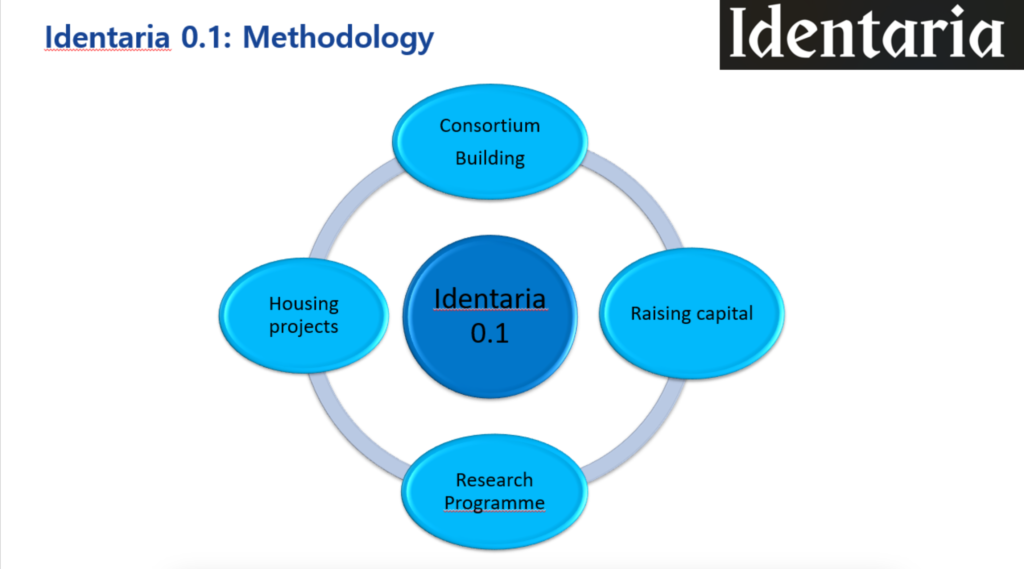
Fig.1: Project management methodology of the Identaria project, phase 0.1
Identaria is designed as an innovative and original concept development and experimentation project. Of course, some parallels between the concept of Identaria and other political and metapolitical concepts such as Zionism and Puritanism could be drawn. Similar to Zionism, the Identaria project is a state-building nationalist concept which seeks to put an end to a specific form of racism by establishing a homeland – in the classical form of a territorial state – for a specific group of people. Puritans, and especially the Separatist and Independent strands in Puritanism, advocated separation from all other established Christian denominations in favour of autonomous gathered churches. The Puritans played a significant role not only in reforming the Church of England, but also in English history (under Cromwell) and in early American history (especially, in New England). A parallel could also be made between the concept of Identaria and the small town of Orania in South Africa. Orania was founded in 1991 with the goal of creating a stronghold for the Afrikaner minority group, the ethnic group descended from the Europeans who colonized South Africa. Of some relevance is also the “Moving together” initiative (“Initiative Zusammenrücken”) in Germany. The initiative aimed to support the moving of Germans from Western Germany – from areas that have been overrun by immigrants – into Central Germany, more specifically to the provinces of Saxony and Thuringia. The lessons learned from small-scale initiatives such as Orania and Initiative Zusammenrücken must be taken into account in the planning process of the Identaria project. More specifically, the crackdown79 on Initiative Zusammenrücken in 2023 clearly demonstrates that it is pointless to waste effort and resources for European nationalist projects in a state with strong totalitarian traditions as Germany. Moreover, it is exactly in Germany that Europeans willing to keep their identity are especially vulnerable to persecution, discrimination and harassment. During protests against the patriotic party Alternative for Germany in January 2024 there have been calls for banning the party and even for deprivation of citizenship (Ausbürgerung) of its supporters.80 If implemented, the totalitarian practice of political and ethnic cleansing and deportation in Germany may lead to a humanitarian crisis with potentially millions of European nationalist refugees forced to flee the country. This scenario should be taken into account in the context of enhancing the peace-building potential of European nationalism.
Identaria should be designed as a revisionist state, that is a state that seeks to alter the balance of power. The establishment of Identaria will be a structural change in the international system in terms of mitigating and putting an end to anti-European racism. The development of a European nationalist homeland will prevent a potential race war as it will provide a territorial safe haven for European identity keepers and nationalists. By implementing the Identaria project European nationalism will start to play an active role in the conceptual architecture of the modern international order. No lasting and credible international order in the 21st century would be possible without the involvement of European nationalism and without the abolishment of anti-European racism and discrimination at the global level.
Identaria is far from being a quixotic project. The concept for a European nationalist homeland is a pragmatic policy-oriented solution to the problem of anti-European racism – a solution, which takes into account the structural constraints of international politics. It draws upon realist and geopolitical theories, seeking to improve and go beyond the two major views in present-day European nationalist thought, ethnonationalism and imperialism, and to mitigate their flaws in terms of purity and power. Neither the development of a European empire, nor the transformation of 52 nation-states (and about 30 U.S. red-states) into “pure” ethnostates is compatible with the structural constraints of the international system and with the power potential of European nationalist movements. What is attainable in balance-of-power international politics seems to be one small multiethnic European nationalist state for the European nationalist tribe, based in a remote and obscure land in Eastern Europe where no one will take it seriously at first. The building of Identaria will be carried out upon an existing state. Along with the solid ground of a territorial state the Identaria project will provide an unparalleled nationalist ideological and cultural cohesion to serve as a basis for a more assertive geopolitical posture in the future. A strong independent and neutral Identaria, well-positioned in the western end of the Heartland could become not only the “holder” of European nationalism but also the “holder” of the balance of power between the Euro-Atlantic and the Eurasian monsters. Thus, a good concept for the promised homeland of European nationalism can tip the future!
And, to conclude in the language that has inspired legions of European nationalists in the past:
Identaria, erwache!
Endnotes:
1 On Evola’s spiritual conception of the race, see: Julius Evola, Metaphysics of War. (ed. John Morgan). Arktos Media Ltd., 2011, 59; 64, 67-68. It should be noted that Evola does not dismiss the biological conception of the race but tries to expand it with the spiritual one. In his own words: “there is a race of the spirit behind the race of body and blood” (Evola, 2011; 67).
2 The regional aspects of Europeanness have been examined extensively under European Union studies. Interestingly, some scholars claim that a better way to understand the EU is to think about it as an expression of regionalism, which is analogous to nationalism, rather than as a kind of a cosmopolitan project. See, Hans Kundnani, ‘The Eurocentric fallacy’: the myths that underpin European identity. The Guardian, 17 Aug 2023
3 For an update about the repressions against the Idetitarian movement in Germany, see: “Die Repressionen gegen die Identitäre Bewegung sind heftig” – Sellner im Gespräch. Sezession, 1 Sep 2023
5 Benedict Anderson, Imagined Communities. Reflections on the Origin and Spread of Nationalism. London, New York: Verso, 2006, 4-12.
6 Greg Johnson, The White Nationalist Manifesto. San Francisco, California: Counter-Currents Publishing Ltd, 2018.
7 Jan-Werner Müller, On Conceptual History. In: McMahon, D. & Moyn, S. (eds.), Rethinking Modern European Intellectual History. Oxford: Oxford University Press, 2014, 74-93.
8 Reinhart Koselleck, Futures Past: On the Semantics of Historical Time, trans. Keith Tribe. New York: Columbia University Press, 2004, 74.
9 Reinhart Koselleck, A Response to Comments on the Geschichtliche Grundbegriffe. In: Lehmann, H. & Richter, M. (eds.) The Meaning of Historical Terms and Concepts: New Studies on Begriffsgeschichte. (Washington, DC: German Historical Institute, 1996), 61.
10 Reinhart Koselleck, The Temporalization of Concepts. Finnish Yearbook of Political Thought, 1, 1997, 24.
11 Anderson, Imagined Communities, 2006, 6.
12 Oswald Mosley, Europe a Nation and Oswald Mosley, The European Declaration
13 On white genocide, see: Johnson, The White Nationalist Manifesto, 2018, 18-22.
14 Greg Johnson, Against Imperialism, Counter-Currents, 27 Dec 2022
15 Francis Parker Yockey, Imperium: The Philosophy of History and Politics, ed. Greg Johnson. Centennial Edition Publishing, 2023.
16 Evola, Metaphysics of War, 2011, 28.
17 Evola, Metaphysics of War, 2011, 53.
18 Evola, Metaphysics of War, 2011, 110-116.
19 Frank Herbert, Dune. London: Hodder, 2015 (first published in 1966).
20 Gregory Hood, The Challenge Ahead, Part I and Part II, American Renaissance, 15 Dec 2022
21 Gregory Hood, The Empire is Inevitiable, Counter-Currents, 20 June 2023
22 John H. Elliott, Imperial Spain (1469-1716). London: Penguin Books, 2002 (first published in 1963), 164-8.
23 Jan Zielonka, Europe as Empire: The Nature of the Enlarged European Union. Oxford: Oxford University Press 2006.
24 David Chandler, Empire in Denial: The Politics of State-building. London: Pluto Press 2006.
25 Nikolay Pavlov, Conceptualizing EU Crisis Management, European Foreign Affairs Review, Vol.20, No.1, February 2015, 23-42
26 Johnson, Against Imperialism, 2022.
27 Hood, The Empire is Inevitiable, 2023.
28 Hood, The Empire is Inevitiable, 2023
29 Yoram Hazoni, The Virtue of Nationalism. New York: Basic Books, 2018.
30 Hazoni, The Virtue of Nationalism, 2018, 6-8.
31 Wilmot Robertson, The Ethnostate. Cape Canaveral, Florida: Howard Allen Enterprises, Inc., 1993.
32 Robertson, The Ethnostate, 1993, 2.
33 Robertson, The Ethnostate, 1993, 23-6.
34 Robertson, The Ethnostate, 1993, 223.
35 Greg Johnson, The White Nationalist Manifesto. San Francisco, California: Counter-Currents Publishing Ltd, 2018; Greg Johnson, Against Imperialism, Counter-Currents, 27 Dec 2022; Greg Johnson, One White State or Many, Counter-Currents, 19 June 2023.
36 Johnson, The White Nationalist Manifesto, 2018, 42.
37 Greg Johnson, In Praise of Calexit, Counter-Currents, 19 Nov 2016.
38 Spencer J. Quinn, On Red-State Secession, Counter-Currents, 4 Oct 2021; Spencer J. Quinn, Red-State Secession Redux, Counter-Currents, 28 Feb 2023.
39 See: https://redstatesecession.org/
40 Stephen Wolfe, The Case for Christian Nationalism. Moscow, Idaho: Canon Press, 2022.
41 Quinn, On Red-State Secession.
42 Quinn, Red-State Secession Redux.
43 The Holy Bible (King James Version), The Acts of the Apostles 24:5.
44 The Holy Bible (King James Version), Gospel according to St. Luke 12:51.
45 Francis H. Buckley, American Secession: The Looming Threat of a National Breakup. New York: Encounter Books, 2020.
46 Post on twitter, 22 Feb 2023. Available at: https://twitter.com/RepMTG
47 Current Status of Secession Movements in the U.S., Red-State Secession, 25 Dec 2020.
48 Johnson, The White Nationalist Manifesto, 2018, 43.
49 Johnson, Against Imperialism.
50 Johnson, One White State or Many.
51 On some conceptual muddles one could be faced with when dealing with highly abstract concepts in the context of European nationalism, see: Asier Abadroa, White Nationalism vs. Racially-Conscious White Ethnonationalisms Part I and II, Counter-Currents, 9 and 10 Jan 2023. An important contribution of the paper is in denouncing the idea of Herrenvolk and highlighting the potential role of smaller European nations in the “unionist” process.
52 On Western individualism, see: Kevin MacDonald, Individualism and the Western Liberal Tradition: Evolutionary Origins, History, and Prospects for the Future. Kindle Direct Publishing edition, 2019.
53 The Real Threat from Europe‘s Hard Right, The Economist, 16 Sep 2023.
54 Greater Idaho: A Vision for a Red Super-state, The Homeland Institute, 3 Oct 2023.
55 Martin Sellner, Regime Change von rechts: eine strategische Skizze. Schnellroda: Verlag Antaios, 2023.
56 Robertson, The Ethnostate, ix. In his view after the fall of the Soviet empire the eastern part of Europe is being rearranged to conform more with culture and race. This is a very general and dated observation which is no longer valid given the complex demographic processes in Eastern Europe, including demographic decline, emigration and huge “brain drain” mostly to Western Europe and to a lesser extent to the U.S. Rearrangement to “conform more with race” doesn’t really make sense as all Eastern Europe is composed of European nations.
57 Robertson, The Ethnostate, x.
58 Johnson, One White State or Many.
59 Collin Cleary, Forgotten Roots of the Left: Fichte’s Moral and Political Philosophy, Part III, Counter-Currents, 3 Mar 2023.
60 Hans Morgenthau, Politics among Nations. The Struggle for Power and Peace. New York: Alfred A. Knopf, Inc., 1949, 13.
61 Morgenthau, Politics among Nations, 1949, 15.
62 Morgenthau, Politics among Nations, 1949, 118; 269.
63 Morgenthau, Politics among Nations, 1949, 8-9; 125-137.
64 Morgenthau, Politics among Nations, 1949, 157.
65 Kenneth N. Waltz, Theory of International Politics. Reading, Massachusetts: Addison-Wesley Publishing Company, Inc. 1979.
66 Waltz, Theory of International Politics, 1979, 88-9.
67 Waltz, Theory of International Politics, 1979, 94.
68 Waltz, Theory of International Politics, 1979, 102.
69 Halford J. Mackinder, The Geographical Pivot of History, The Geographical Journal No.4, Vol XXIII, April 1904.
70 Halford J. Mackinder, Democratic Ideals and Reality: A Study in the Politics of Reconstruction. London: Constable Publishers, 1942 (first published in 1919), 76.
71 Mackinder, Democratic Ideals and Reality, 1942, 77.
72 Mackinder, Democratic Ideals and Reality, 1942, 72.
73 Mackinder, Democratic Ideals and Reality, 1942, 106.
74 Morgenthau, Politics among Nations, 1942, 116.
75 Mackinder, The Geographical Pivot of History, 1904.
76 Knud Jørgensen and F. Asli Ergul Jorgensen, Realist theories in search of realists: The failure in Europe to advance realist theory, International Relations Vol. 35, Issue 1, 2021.
77 ‘These are conditions ripe for political violence’: how close is the US to civil war? The Guardian, 6 Nov 2022.
78 Greg Johnson, Questions on NATO, Russia and Ukraine, Counter-Currents, 18 Oct 2022.
79 Mehrere rechtsextreme Gruppen verkünden Auflösung, Mitteldeutsche Rundfunk, 29 Sep 2023.
80 See, for example: Massendemos gegen rechts in ganz Deutschland, Krone, 20 Jan 2024.