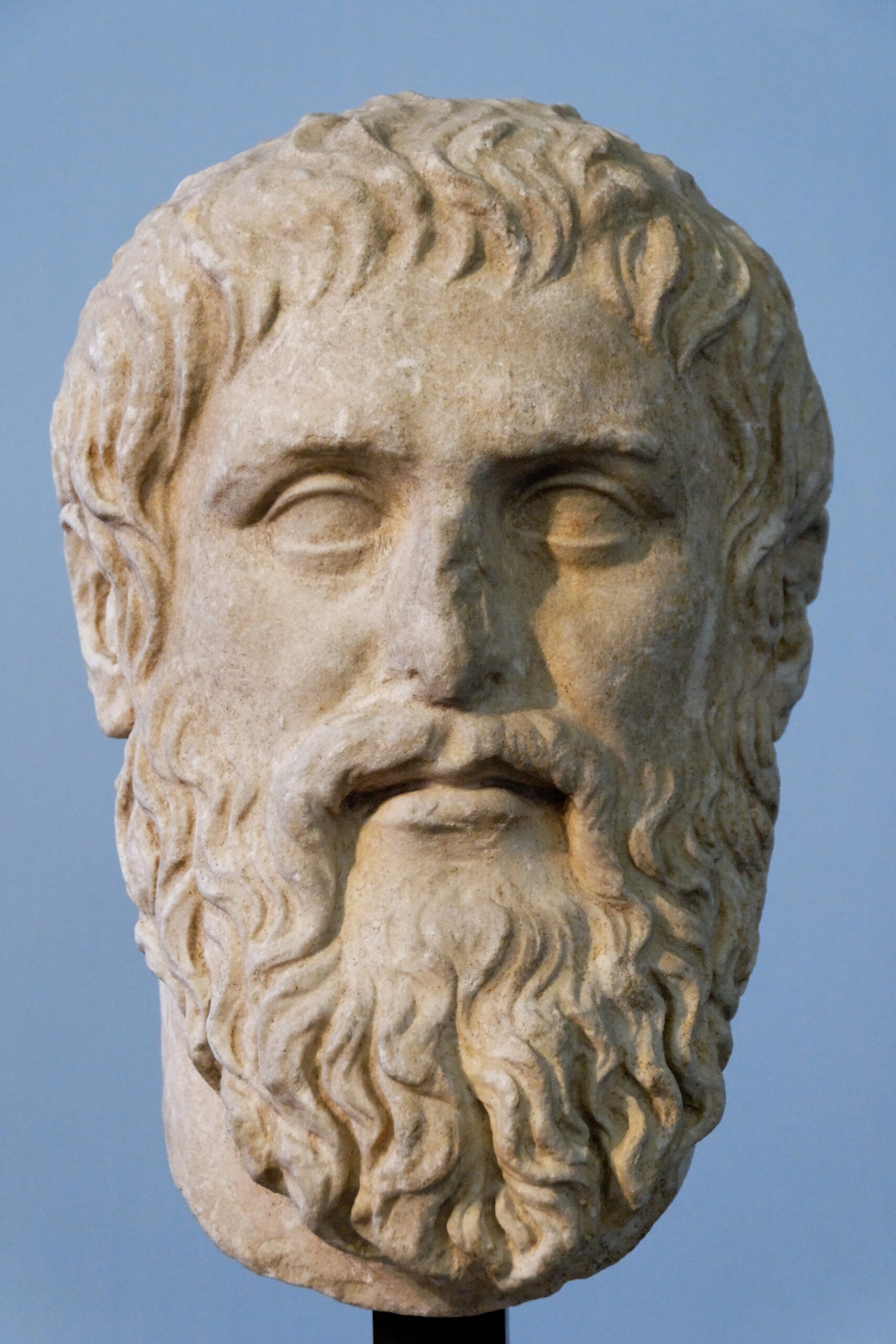
 The world of Ancient Greece is associated mainly with glamorous statues and breathtaking buildings; with rich mythology and capturing tales; with the ideas of liberty and democracy. Plato’s seminal work “The Republic” however reveals a darker side of the ancient realm of ideas. In “The Republic” the student of Socrates describes what he perceives to be “the ideal State”. In fact, this “perfect state” is rather ominous for the individual, and this is the reason why many consider Plato the Father of the totalitarian state.
Structured as a dialogue between Socrates and various citizens of Athens, Plato reveals a land where philosophers are kings. They rule over people, who are specifically chosen and even bred for the perfect state. Plato’s brutal eugenics policy aims at engineering the perfect society, which includes three types of people:
“… some of them God framed to rule, whom he fashioned of gold; others he made of silver, to be auxiliaries; others again to be husbandmen and craftsmen, and these were formed by him of brass and iron.“
For Plato the assertion that “all men are created equal” obviously does not hold any truth. He even goes so far as to propose “hiding” the ones born incapable, not aiding the sickly and even that the government should artificially create some sort of Übermensch by giving the finest women in the Republic to the most renowned warriors. In this sense individuality is strictly forbidden in his polis, based on the military state of Sparta, for even the ones who stand out are products of the state.
Another aspect of Plato’s totalitarianism is censorship of poetry with the intention of shaping a young man’s mind exactly in the way the government desires. “Many things pleased me in the order of our state, but there was nothing which I liked better than the regulation about poetry” Socrates states ominously. Even one’s thoughts should be designed according to state standards. A man, Plato suggests, should not be weakened by the “outrage on the understanding” as he views poetry.
Moreover, Socrates declares that the rulers in the perfect state must deceive the public, should the need for such actions arise. Of course, he considers this “noble lie” to be in the name of the greater good, stating: “founding the State was not the disproportionate happiness of any one class, but the greatest happiness of the whole”. This quite utopian concept however holds the dark truth of the destruction of the individual. Plato’s Big Brother should not only determine how people live, think, read, mate, but even how they should be happy. This is the reason why Aristotle left Plato’s Academy and even proposed an opposing view, according to which the state should not make the people happy, but should rather give them the resources to be happy.
Plato’s citizen will definitely be lacking individuality. To great extent he is like a clone, designed by and for the state. In the totalitarian Republic individuality is strictly forbidden and even detested, for the government somberly declares that justice consists in everyone doing exactly what they are made for or, in other words, what the state has made them for.
The suppression of individualism in Plato’s Republic poses a great challenge to the concept of Identaria as a pan-European identity-based state. Individualism is one of the characteristic features of European nations. MacDonald claims that the pre-historic invasion of the Indo-Europeans had a transformative effect on Europe, inaugurating a prolonged period of “aristocratic individualism”, followed by “egalitarian individualism”. In this context, it is of great practical importance to strike the balance between European individualism and the requirements of collectivism in a pan-European identity-based state.