Part 6 of Nietzsche’s “Thus spoke Zarathustra” and the Identaria project
The objective for an aristocratic arrangement of society is not clearly specified in Zarathustra but it can be constructed based on the concept of the overman and some related ideas scattered throughout the book. In general, there is a great disaffection in Nietzsche towards the “men of today” and against the so-called “higher man”. This is how Zarathustra (Nietzsche) refers to the “men of today” in the chapter “The Land of education”: “This, indeed this, is bitterness for my bowels, that I can endure you neither naked nor clothed, you men of today… Strange and a mockery to me are the men of today to whom my heart recently drew me; and I am driven out of fatherlands and motherlands.”
This and other similar lines in the text could be interpreted as hardly veiled misanthropy against the “men of today” which formed the main motivation and the backdrop for the concept of the overman. Then, in Part Four comes the castigation of the higher men. For those that are willing to find there are also some hints against multiculturalism in Nietzsche’s disaffection with the “men of today” in “The land of education”: “Never had my eyes beheld anything so dappled and motley. I laughed and laughed while my foot was still trembling, and my heart no less. “This is clearly the home of all paint pots,” I said.”
There are also hints against multiculturalism in the chapter “Conversation with the kings” in which some of the very rare ethnical references in Zarathustra are expressed: “But it is the realm of the mob; I shall not be deceived any more. Mob, however, means hodgepodge. Mob-hodgepodge: there everything is mixed up in every way, saint and scamp and Junker and Jew and every kind of beast out of Noah’s ark.” Especially vivid is the original German term coined and used by Nietzsche: “Mischmasch-Pöbel”. The sentence “it is the realm of the mob” is repeated once again in the chapter “The magician”.
Nietzsche is also highly critical of the state as clearly specified in the chapter “On the new idol” with the following bold statements:
“State is the name of the coldest of all cold monsters.”
“But the state tells lies in all the tongues of good and evil; and whatever it says it lies—and whatever it has it has stolen. Everything about it is false.”
“State I call it where all drink poison, the good and the wicked; state, where all lose themselves, the good and the wicked; state, where the slow suicide of all is called “life.”
“Only where the state ends, there begins the human being who is not superfluous: there begins the song of necessity, the unique and inimitable tune. Where the state ends — look there, my brothers! Do you not see it, the rainbow and the bridges of the overman?”
Some commentators have been tempted to find a veiled form of anarchism in Nietzsche’s views on the state. Others, like Kaufmann have interpreted the vehement denunciation of the state (and allegedly of war) as “anti-fascism” (Kaufmann, 1976) which seems an overstatement and not corresponding to the original text. Nietzsche’s dislike of the state was very real as after 1869 he actually lived as a stateless person. When he accepted the university position at the University of Basel, Nietzsche applied for annulment of his Prussian citizenship and received official revocation of citizenship in April 1869. For the rest of his life, he remained officially stateless. He had already walked the walk of statelessness long before Zarathustra.
Nietzsche’s “aristocratic radicalism” is more clearly expressed in his most undemocratic words: “Men are not equal” – repeated twice, in the chapter “On the tarantulas” and “On scholars”. For many people these words are part of Nietzsche’s “challenge to the prevailing liberal-humanistic worldview” and expression of his radical aristocratism (Crowley, 2023). Indeed, in the chapter “On old and new tablets” (Section 11 and 12) he proclaims the need for a new nobility (einen neuen Adel):
“Therefore, my brothers, a new nobility is needed to be the adversary of all rabble and of all that is despotic and to write anew upon new tablets the word “noble.” For many who are noble are needed, and noble men of many kinds, that there may be a nobility. Or as I once said in a parable: “Precisely this is godlike that there are gods, but no God.”
“O my brothers, I dedicate and direct you to a new nobility: you shall become procreators and cultivators and sowers of the future — verily, not to a nobility that you might buy like shopkeepers and with shopkeepers’ gold: for whatever has its price has little value.”
“O my brothers, your nobility should not look backward but ahead! Exiles shall you be from all father- and forefather-lands! Your children’s land shall you love: this love shall be your new nobility—the undiscovered land in the most distant sea. For that I bid your sails search and search.”
At the same time a more nuanced and skeptical view towards the existing nobility is expressed in the chapter “Conversation with the kings”. Referring to the nobility one of the kings says: “They are false and foul through and through, beginning with the blood, thanks to bad old diseases and worse quacks. Best and dearest to me today is a healthy peasant, coarse, cunning, stubborn, enduring: that is the noblest species today.” Moreover, Zarathustra states in the chapter “Conversation with the kings”: “I am Zarathustra, who once said, ‘What do kings matter now?’”
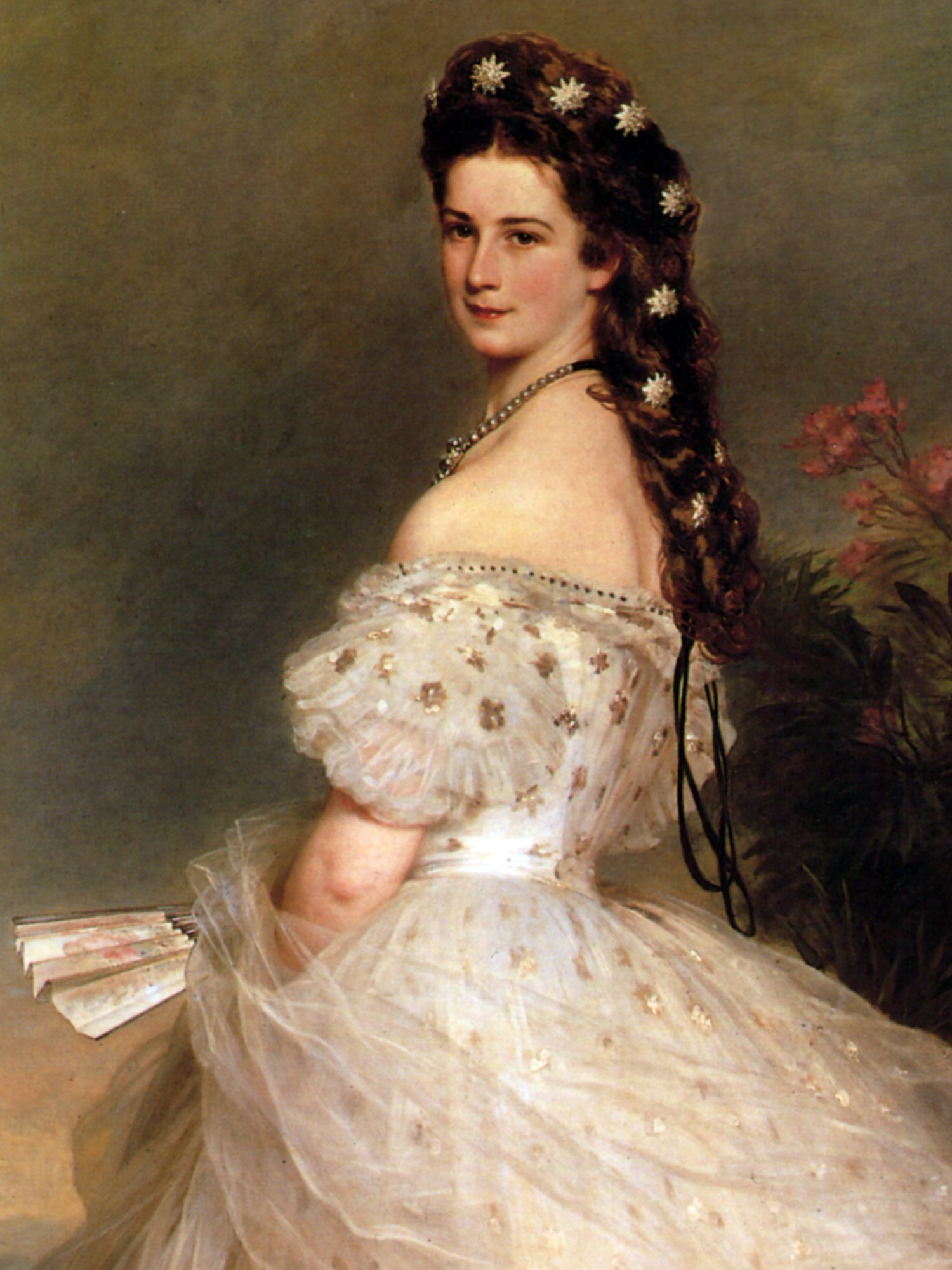
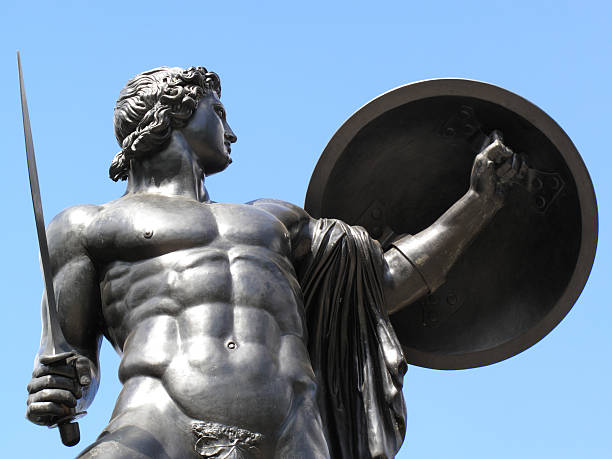
Overall, Zarathustra’ s aristocratism is internally controversial. He promotes the idea for a new nobility in very general terms mainly by opposing it to the existing nobility, the “men of today” and the “higher man”. It is not clear how the new nobility of the overmen could be created and what would be the relations of this new “class” to the common people. Could this be some sort of warrior nobility epitomized by Achilleus in antiquity and the Bulgar warrior nobility of the early Middle Ages in which “the ranks and honours were gained on the battlefield” as described by Ennodius? Could this be realistic for a modern society or only in case of a large-scale war on the international arena? On the other hand, nobility and, more broadly aristocracy is multifaceted. A good example is Elisabeth (nicknamed Sisi), empress of Austria and Queen of Hungary who was married to Franz Josef I, Emperor of the Austro-Hungarian empire. She is a symbol of female beauty but also of the tragic fate of the “old nobility” represented by the Habsburg dynasty. Interestingly, Elisabeth was inspired by Achilleus and the palace built for her on Corfu Island was named after Achilleus: the Achilleion. In fact, this and other aspects of nobility have not been examined in Zarathustra. The idea for a new nobility is indeed original but actually was not further elaborated by Nietzsche. The main weakness of his “radical aristocratism” is that the new nobility should operate in a stateless society, “where the state ends” which is hardly imaginable. Therefore, the concept for a new European nobility and the aristocratic arrangement of society in Identaria must be theoretically strengthened by insights from Julius Evola who has further developed Nietzsche’s radical aristocratism and by applicable theories of the state. Sound theoretical foundations are needed to ensure that the aristocratic arrangement of society in Identaria will be achieved within the framework of a state structure.
Bibliography
Crowley, Chad. Embracing the Übermensch: Nietzsche’s vision of radical aristocratism, Arktos Insight, 16 June 2023. Available at: https://arktos.com/2023/06/16/embracing-the-ubermensch-nietzsches-vision-of-radical-aristocratism/
Kaufmann, Walter. ‘Introduction and editor notes’, The portable Nietzsche (Penguin Books, 1976).
Nietzsche, Friedrich. Thus spoke Zarathustra. A book for all and none, trans. Walter Kaufmann (Penguin Books, 1976).