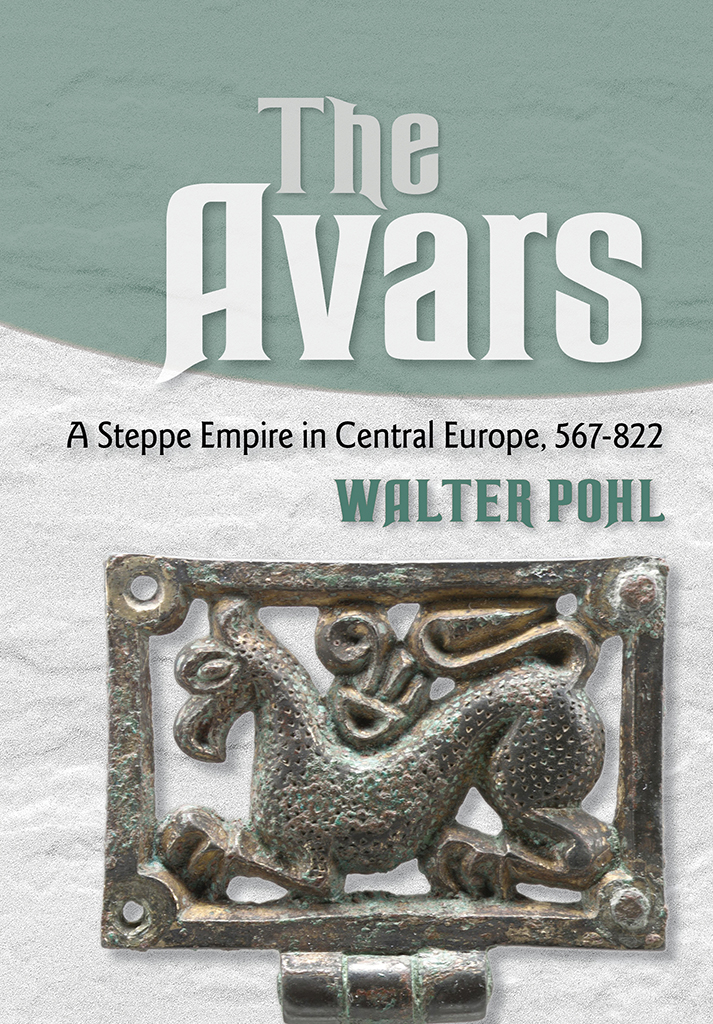
 Review of Walter Pohl. The Avars. A Steppe Empire in Central Europe, 567-822. Cornell University Press: Ithaca and London, 2018.
Walter Pohl’s monograph on the Avars is a well-informed left-wing study of a most non-commercial subject, the history of the Avar khaganate. It is arguably the most comprehensive and detailed historical study of this vanished people, who played a major role in Central and Eastern Europe during the Early Middle Ages. It is positive that the author highlights the role of the steppe peoples in making Europe. As he puts it, “it seems promising to turn to a neglected Eurasian element in the European past: the steppe peoples.” (Pohl, 2018: 1) As a Bulgarian I truly believe that the role of steppe research for understanding Europeanness is of great importance. Therefore, I have approached the book with much interest and respect. The author, Prof. Walter Pohl is fellow of the Austrian Academy of Sciences, former Director of the Institute for Medieval Research at the Austrian Academy of Sciences and former Professor of Medieval History at the University of Vienna. He is one of the leading scholars on the history of the Avars and representative of the strong Austrian school of steppe research. The book has certainly contributed to the historical study of the Avars; nevertheless, it also reflects the influence of left-wing ideology within Western academia.
In conceptual and ideological terms “The Avars” is framed by strong negativism towards ethnicity and ethnic identity in general. This is justified by the manipulative equation between nationalism and national-socialism (Pohl, 2018: 13) which serves as a basis for an anti-nationalist research agenda. Although not explicitly stated the author’s approach is built around the left-wing understanding of ethnicity as a social construct which must be deconstructed. Ethnicity is viewed as an abstraction. In Pohl’s words: “a people is not a natural given but an abstraction” (Pohl, 2018: 17). Of course, one could interpret any high-level concept — such as ethnicity or democracy — as an abstraction. This left-wing ideological framing impairs the work’s otherwise valuable scientific contributions. The Avar khaganate is described as a sort of “open society” of the Early Middle Ages in Central and Eastern Europe. Avar rule in the region is praised for its “impressive cultural diversity” (Pohl, 2018: 14) and as “the story of a successful synthesis” (Pohl, 2018: 402). As Pohl puts it, “in fact, the Avar empire was always open to the east for immigration as well as for cultural exchange” (Pohl, 2018: 401). At this backdrop, the historical record of multiculturalism-based violence in the Avar Open Society seems understandable and acceptable.
One of the major problems with the left-wing critique against ethnicity is that it is hardly productive in scientific terms and contradicts the reality of international politics throughout history. The main deliverable of the anti-nationalist research agenda in “The Avars” is a fragile construct, a sort of “non-ethnical ethnicity”. As Pohl puts it, “there is no “real” ethnicity behind ethnonyms in our sources that could be objectively defined by modern categories of common blood, genes or language” (Pohl, 2018: 32). Ethnicity and ethnic identities in “The Avars” are conceptualized as “the results of a process of communication and interaction in which self-identification of individuals with a group, identification of the group as such by its representatives and in rituals, and the perceptions of the group by outsiders all play a part” (Pohl, 2018: 13; 154). The strength of the definition is in its focus on identity and identity dynamics (shifts in ethnic identities). In the conceptual work, it would be fruitful to link identity to the well-known principle of self-determination, a fundamental tenet of international public law. It is positive that language has not been fully discarded as it is implied in “the process of communication”. Territory as a politico-geographical space – a common feature in traditional definitions of ethnicity and nationality – is missing, which is not appropriate even when it comes to steppe peoples. The main weakness of the concept, however, is that common origin and even the possibility of common origin are completely dismissed. This clearly contradicts myriads of examples in world history as well as everyday life where common origin and kinship have played and still play a major role. Origin stories are universal feature of the humankind. The concept of origin is much more complex than a simplistic biological understanding in terms of common blood. Ethnical groups, peoples and nations have been among the major driving forces throughout history and to date. Of course, there are many different modes of common origins, different intensities and circuits of common origin, especially when it comes to larger groups of people where origins tend to diffuse. Apart from the political reality of ethnicity it has also strong spiritual aspects which are reduced to “rituals” in the concept of non-ethnical ethnicity. The methodological reductionism in the study of early medieval ethnicity in “The Avars” inevitably affects the scientific credibility of the conducted research. Identity and identification can hardly replace common origins. Although it sounds trendy the concept of identity is intimately linked with the older concept of origin. Apart from a shared sense of purpose and allegiance identity implies also the notion of common origin, no matter real or imagined.
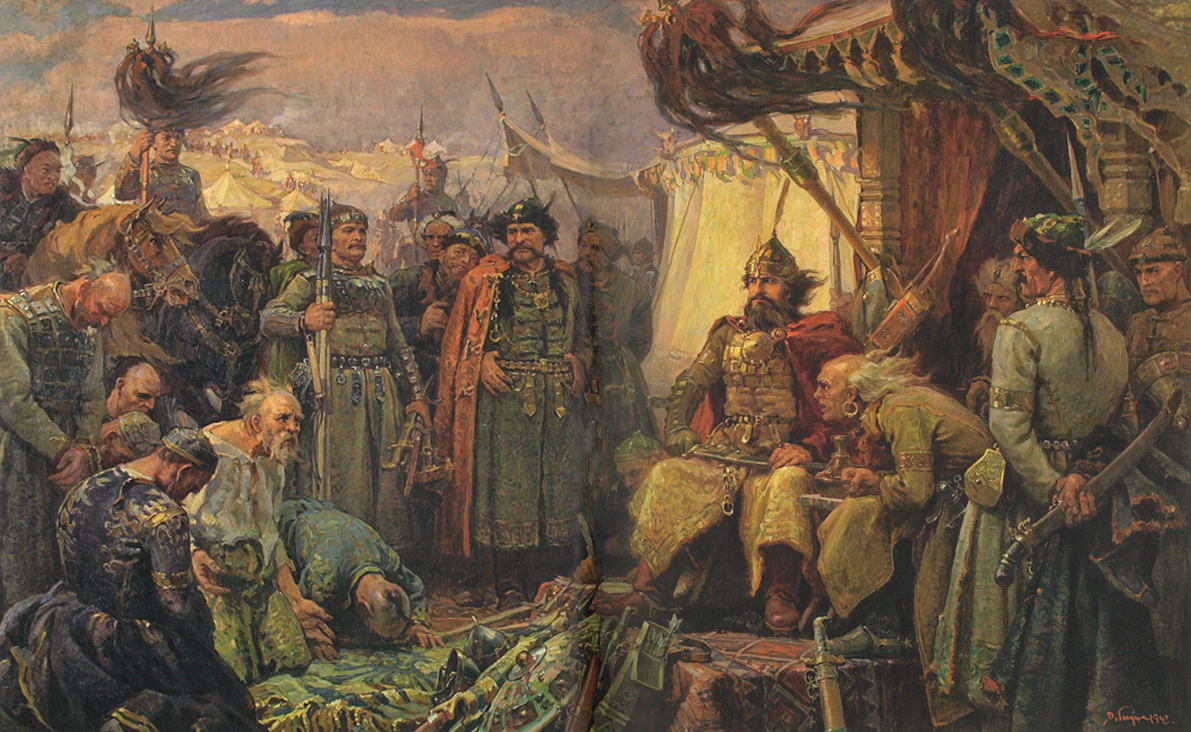
A clear example of the deficiencies of the employed concept of non-ethnical ethnicity is the representation of the Bulgars in “The Avars”. As a whole Bulgars are presented in the shadow of the Avars, as “less prestigious but still privileged groups of horsemen who were prepared to live under foreign rule” (Pohl, 2018: 263). In line with the concept of non-ethnical ethnicity Bulgars are seen as “mobile groups of steppe riders who fought under the Avars but then emancipated themselves” (Pohl, 2018: 273). In the 7-th century, Bulgars are viewed as “dissidents” and secessionists from the Avar khaganate. The author draws only on sources and literature supporting this Avar-centric viewpoint, which undermines the objectivity of the research on the Bulgars. In general, the academic literature on the Bulgars in “The Avars” is very dated. With minor exceptions it remains the same as the literature in the first German-language edition of the book in 1988. An enormous body of scholarly literature on the Bulgars has been published since – both in Bulgarian and in English – most of which critical towards the Turkic myth about the Bulgarian origins. Even more importantly, major historical sources on the Bulgars have been overlooked or only cited selectively in “The Avars”. For example, there are no adequate references to Armenian sources (the Armenian geography Ashkharhatsuyts is only cited very selectively) or the Chronograph of 354. The seminal work by Movses Khorenatsi (c. 410–490s AD) “History of the Armenians” – which is one of the earliest sources mentioning the Bulgar – is not referred to in “The Avars”. Important pieces of information about the Scythian origins of the Bulgars (including of the Cutrigurs and Utigurs) in Procopius’ “History of the Wars” and the Chronicle of Michael the Syrian have been omitted. These sources could be very helpful for explaining the role of the local Scythian population (more specifically, Sarmatians and Cimmerians) in the steppes north of the Black Sea and the Caucasus in the emergence of the “Ogur” groups and more generally in the Bulgar ethnogenesis. Some scholars point to more ancient roots of the collective suffix -gur and -dur meaning “tribe” in Sumer and the Pamir Mountains (Добрев, 1994: 26, 53 и 69) as opposed to the Pan-Turkic interpretation of the -gur suffix and, respectively of the -gur peoples on the Black Sea. No historical source – Roman or otherwise – refers to the -gur peoples with the ethnic label “Turks”, nor were they regarded as such by the Turks themselves in the 6-th century, when some of these groups, specifically the Utigurs, were subjugated by the Turkish khaganate.
The Nominalia of the Bulgarian Khans (known also as the Bulgarian list of rulers) has also not been adequately utilized in “The Avars”. The reason for that might be in that the Bulgarian list of rulers presents an original genealogy and tradition which is completely independent from the Turk and Avar rulership traditions (the Ashina and the Baian dynasty, respectively). Paradoxically, there may indeed be an Avar trace in the Bulgarian list of rulers — not in the names of the rulers themselves, but, as Vojnikov and Vojnikov suggest, in the specific designations of calendar years and months, which are probably a legacy of the Avars and remnants of their now-extinct language (Войников и Войников, 2017). Most likely, the Avars have been the intermediaries between the Chinese animal cycle calendar and its Bulgar duplicate in which Avar calendar names have been used.
It must be appreciated that in “The Avars” the author does not make use of artificial terms such as Proto-Bulgars but rightfully makes use of the original ethnonym Bulgars instead. In the Conclusion he defines Bulgars as one of the three models of barbarian life in post-Roman Eastern Europe (along with the Avar and Slav models) which is well-grounded. “These three distinct models of organization and identification permitted the emergence of three distinct peoples along the Middle and Lower Danube – Avars, Bulgars and Slavs. Occupation and behaviour determined ethnic identities at least as much as vice versa” (Pohl, 2018: 399). It is worth noting that, despite the ebb and flow of history and the inevitable adaptations to changing international circumstances, Bulgarian identity (with its cherished Slavic component) stands as one of the few enduring and continuous identities in Europe. It is very likely that it was precisely the ethnical substance that made the continuity of Bulgarian identity possible, against all odds.
Bibliography:
Pohl, Walter. The Avars. A Steppe Empire in Central Europe, 567-822. Cornell University Press: Ithaca and London, 2018.
Войников, Живко и Иван Войников, Древнобългарският календар и именникът на българските владетели. София: Сиела, 2017.
Добрев, Петър. Светът на прабългарите. София: „Славика-РМ“, 1994.