The new U.S. National Security Strategy developed by President Donald Trump’s administration and published in November 2025 offers an ideal starting point for framing a new strategy for the European patriotic forces. The new U.S. National Security Strategy has been widely hailed by most patriotic parties, formal and informal patriotic groups, outlets and activists across Europe. On the opposite end of the political spectrum, it was criticized by EU officials and the mainstream media.
What makes the new U.S. National Security Strategy (NSS) so remarkable is its clear and outspoken message, well-articulated geopolitical reasoning and the acknowledgement of the primacy of the nations as one of its basic principles. Conceptually, the NSS is embedded in political realism, a theoretical framework which considers nation-states to be the basic units of the international system and which justifies the use of power with the anarchic nature of international politics. This is a major step forward from the long-dominating liberal theories which gave priority to international organizations, and the imagined “liberal international order”. The EU itself has cherished the narcissistic self-image of a “civilian” or ”liberal power”.
On top of all, the NSS presents a new concept of Europeanness, a clearly nationalist approach to Europe which is in stark contrast with the bland European identity promoted by the EU bureaucracy so far. This nationalist approach – along with the more balanced and neutral position to Russia – has been the main reason for the strong dislike with which the strategy was met by the EU establishment and globalist networks.
Tellingly, the highly emotional sub-chapter on Europe in the U.S. National Security Strategy (Chapter IV.3.C) is entitled “Promoting European Greatness”. No official EU document has ever referred to promoting European greatness. The same counts for the risks facing Europe identified in the U.S. National Security Strategy. The document clearly refers to “the real and stark prospect of civilizational erasure” of Europe and the risk that over the long term “certain NATO members will become majority non-European”. Activities of the EU that undermine political liberty and sovereignty, migration policies that are transforming the continent, censorship of free speech and loss of national identities are listed as risks facing Europe. For the first time in an official document of this level, the EU is portrayed not merely as something distinct from Europe, but—at least in certain respects—as a threat to Europe itself. In the strategic document Trump’s administration states that “we want Europe to remain European, to regain its civilizational self-confidence.” A major boost is given to the European patriotic parties: “the growing influence of patriotic European parties gives cause for great optimism”. Two priorities in this respect are defined in the U.S. policy for Europe:
– Cultivating resistance to Europe’s current trajectory within European nations; and
– Building up the healthy nations of Central, Eastern, and Southern Europe through commercial ties, weapons sales, political collaboration, and cultural and educational exchanges
These policy priorities which are obviously oriented to supporting the European patriotic and national-conservative parties have sparked considerable concern in the mainstream media. The question is whether the European patriotic parties – some of which are still largely driven by narrow-minded “petty nationalism” – will be able to live up to the challenge set out in the new U.S. National Security Strategy.
From the U.S. National Security Strategy to a Strategy for the European patriotic forces
Even a brief comparison reveals a stark disparity between the new U.S. National Security Strategy, on the one hand, and the EU’s strategic documents, on the other. The main strategic documents of the EU in this area (the 2003 European Security Strategy and the 2016 EU Global Strategy) entail mostly dull, meaningless slogan-like statements: “the EU remains an anchor of stability”; “diversity is what makes us strong”, etc. This bland and emotionless bureaucratic phrasing abounds also in the latest EU document in this area, the Strategic Compass for security and defence adopted in 2022. The Strategic Compass is full of meaningless, sugared and hollow statements such as: “the European Union is more united than ever. We are committed to defend the European security order.” The document’s main novelty is the strong critique against Russia over the war in Ukraine. Public perceptions and fears of ordinary people regarding the most pressing security risks in Europe (such as Islamization and migration crime) and regarding EU’s support for Ukraine are not taken into account in EU documents, not to speak of the risk of civilizational erasure specified in the new U.S. NSS.
Shortly after the unclassified version of the new U.S. National Security Strategy was publicly released there have been speculations about a “longer version” of the strategy. In this “longer version” Trump’s administration allegedly proposes to focus U.S. relationships with European countries on a few nations with like-minded right-wing administrations and movements. Austria, Hungary, Italy, and Poland are allegedly listed as countries the U.S. should “work more with… with the goal of pulling them away from the European Union.” (Myers, Defese One, 2025). “And we should support parties, movements, and intellectual and cultural figures who seek sovereignty and preservation/restoration of traditional European ways of life…while remaining pro-American,” the longer version of the document allegedly says. Although the White House denied the existence of a longer version it could be conjectured that it was most likely a draft version which represented the views of someone within Trump’s administration, views which at some point, were deemed politically inexpedient and removed from the final version.
The idea – speculative or real – was taken up enthusiastically by some activists in Europe and further exploited. For example, Martin Sellner, founder of the Identitarian movement of Austria proposed that:
“a number of Nations leave the EU in 2027 in a coordinated move to establish the AfE, Alternative for Europe, a national-conservative, anti-woke, U.S.-friendly remigration alliance. They withdraw from the ECHR, create an “alternative Frontex”, enforce pushbacks, mass deportations and asylum cities in Africa.”
The unrealistic idea for collective secession from the EU once again poses the problem of the significant political and ideational fragmentation of the European patriotic forces. More generally, it exemplifies the lack of strategy of the European patriotic forces in a time when Trump’s security strategy “shifts the Overton window” (Andersen, 2025).
Exiting the EU should not be the strategic objective of European patriotic forces and their respective homelands, neither individually nor collectively. As demonstrated by the political developments in the United Kingdom after Brexit exiting the EU is by no means guarantee against woke and anti-national policies. By many accounts, the present post-Brexit Labour government in the UK has been one of the most anti-British, repressive, woke and corrosive governments in this country for many years. The suppression of free speech is harsher in the UK compared with many EU member states. As noted by a keen observer it is scarcely possible to envisage a country in a worse state than Britain is now (Gullick, 2026). In fact, many of the problems Europe is facing today have been created in the member states and only exacerbated and “harmonized” by the EU’s bureaucracy. As Brexit has shown, leaving the EU entails an enormous and highly complex negotiation process that can drag on for many years. The complexities of EU law and the binding treaties signed by member states will pose a great challenge for any country willing to exit the Union. A “coordinated move” of several countries leaving the EU is mere fantasizing. Setting such an objective for European patriotic parties would be an enormous and fruitless loss of energy. Secession from the Union would diminish and disperse the overall power potential of the European patriotic forces. Efforts to leave the EU would divert time, energy, and political capital away from the much more significant and strategic objective of taking over the EU.
Taking over Brussels
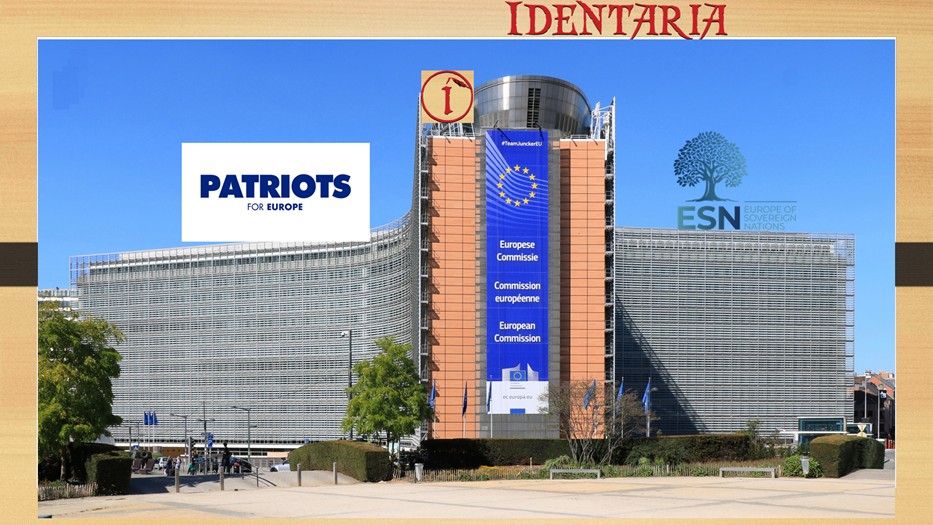
The principal objective of the European patriotic forces should not be to exit the EU or to dismantle it in a symbolic act of “destroying Brussels”. Openly or covertly, the destruction of the EU has been one of the principal objectives of Russian foreign policy after the start of the war in Ukraine but this is certainly not in European nations’ interests. Despite its shortcomings the EU has definitely contributed to establishing peace among European nations, to bringing about reconciliation and enhancing well-being. The totalitarian regime in Russia is no better alternative to the nations of Europe than the globalist EU establishment. The destruction of the EU is hardly realistic given the enormous investments member states have made in this singular sui generis international organization over more than half a century. Such organizations die hard. The strategic objective of the European patriotic forces should rather be to swarm, forming a strategic alliance for “taking over” Brussels and EU institutions, the EU Parliament in the first place. Politically and most naturally, this alliance should involve all parties from the existing two patriotic EU parliamentary groups, “Patriots for Europe” and “Europe of sovereign nations” plus newly-emerged patriotic parties in Europe who declare affiliation to one of the two patriotic groups. “Patriots for Europe” alone is presently the third largest parliamentary group in the EU Parliament. Indeed, the merger of both groups is unlikely but synchronization of efforts and strategies with a view to the next EU Parliament elections in 2029 is desirable. The strategic political objective of the European patriotic forces should be to attain majority in the next EU Parliament elections in 2029 and to rule the Union in the spirit of the “Europe of sovereign nations” concept.
Politics First
The strategic objective sets party politics and political campaigning as priority number one for the European patriotic forces. The slogan “Europe first” comes with the reality slogan “Politics first”. All metapolitical efforts – which have been the main occupation of many informal groups and lone activists so far – should be reoriented to supporting the European patriotic parties for the EU elections 2029. A political mobilization of all patriotic resources available is needed in a strategic effort which is aggressively democratic. As a powerful social network Elon Musk’s X could be very helpful for consolidating the European patriotic forces and more generally the populist opposition across Europe long before the next EU Parliament elections. Given that voting in EU elections is largely unpopular, every vote will weigh a lot. This means summoning all patriotic forces in the “Barbaricum”, including identitarian organizations and marginal groups all of which could contribute, in one way or another, to the takeover of Brussels. The whole Barbaricum – as the Romans called the “barbarian lands” beyond Roman administrative control – must be summoned. The dark “Hunnic” side of the European soul must be awakened.
In geopolitical terms, European patriotic parties, Hungary’s Fidesz and Austria’s Freedom party (FPÖ) have already gained strong grounds in Hungary and Austria, respectively. These patriotic bases in what was once the Roman province of Pannonia must be strengthened and expanded.
An important tool for strengthening political capabilities could be a bespoke Research Programme for the European patriotic forces. For many years the development of European science has been considerably hindered by political correctness and liberal normative assumptions. Left-wing dominion and woke ideological control over much of the European academia have limited the horizon of European science. Repressions against academics and academic institutions at the European and member-states level are on the increase. At this backdrop European national-conservative and patriotic parties have no adequate scientific support for developing and pursuing research-based policies at the European level.
The strategic and political objectives of the Research Programme should be, as follows:
– Reclaiming the West in the research area;
– Preparing the grounds for reclaiming the West in the Western academia;
– Enhancing research cooperation among the patriotic stakeholders in Europe: think tanks, NGOs, publishers, dissident academics and independent researchers;
– Professional research support to European patriotic policymaking; and
– Providing professional research support to the European patriotic parties in the political fight for achieving majority in the next European Parliament elections in 2029.
In setting-up the Research Programme the model of the EU’s flagship Programme for research and innovation “Horizon Europe” could be used. The basic principles of the Patriots’ Research Programme should be: project-based funding, independent peer-review process and focus on actionable policy research. The management of the Research Programme should be entitled to independent non-political and not-for-profit organizations with research / academic experience. The development of such a bespoke Research Programme will not only demonstrate strength and intellectual prowess but will also have direct policy impact in terms of providing science-backed political “ammunition” to the European patriotic parties. Last but not least, the Patriots’ Research Programme will be a major test for the ability of the European patriotic forces to manage effectively the European Union’s research and innovation policy in the long run.
Primary targets of attack
As this is a strategy the primary targets of political attack should be clearly defined. Three potential targets could be identified, all of them representing European Union policy areas which are “weak spots” to be be put under constant attack by the European patriotic forces in the upcoming campaign for the next European Parliament elections in 2029.
1. EU Migration policy
The first and most obvious target is the EU’s migration policy. This policy area has been clearly addressed in the “Patriots for Europe” Manifesto stating that “we believe in a Europe determined to protect its borders, to stop illegal migration and to preserve its cultural identity, following the Will of the vast majority of European citizens”. In a similar vein, the migration threat has been identified in the political declaration of “Europe of sovereign nations” (ESN):
“Uncontrolled mass immigration reshapes our homelands in disastrous ways. We consider this migration to be an existential threat to the European nations. Nothing but cooperation at the European level will enable us to effectively protect our external borders – to create a true Fortress Europe – and stop the inflow of illegal immigrants into our countries.”
A major overhaul of the EU migration system is needed to reinforce external borders and provide the conditions for building up Fortress Europe. A thorough revision of the EU legal framework on migration and asylum as well as enhancing the operational capabilities of Frontex will be important elements of the European patriotic parties’ strategy in this area.
2. The Common Security and Defence Policy
The second target area should be the EU policy area known commonly as the Common Security and Defence Policy (CSDP) which includes a range of sub-areas such as European external action and EU peace-building missions and operations. Not only does this area fall outside the EU’s core competences, but it has also become heavily influenced by globalist interests and increasingly burdened by bureaucracy in recent years. A major corruption scandal is underway in this area as the former EU foreign policy chief, Federica Mogherini was detained in December 2025 and accused of fraud as part of an EU investigation into the misuse of funds. Support to Ukraine under the so-called European Peace Facility as well as much of the war-mongering since the start of the war in Ukraine comes from this policy area. This is an area where European nations have been deprived of sovereignty in a most arrogant and undemocratic way by means of sly bureaucratic procedures, without the consent of the ordinary people in Europe. In this area – framed by totalitarian federalist ideas such as “United States of Europe” and “European Army” – hatred against the nation-states and against the concept of Europe of nations is most explicit. Therefore, a radical overhaul of the EU’s security, foreign and defence policy is needed. The major transnational body in this area, the European External Action Service (EEAS) must be investigated and, eventually dismantled.
Of course, a radical overhaul of the CSDP would not mean completely discarding the idea for foreign policy cooperation between the sovereign nation-states of Europe. Take for example one of the topical international problems, U.S. President Donald Trump’s desire to acquire Greenland for national security reasons. The European patriotic forces and, respectively EU member states should be able to coordinate their foreign policy efforts in a bid to prevent more hostile U.S. actions or an invasion in Greenland as this will be a major blow to Europe sparking new division lines. Unlike the present state of affairs in the EU, this foreign policy coordination should not be appropriated by an EU “transnational body” such as the EEAS – representing predominantly globalist interests – but should rather take place among the nation-states themselves.
3. EU Enlargement
The third target area of attack should be EU enlargement, an area which is also governed by globalist interests seeking to “increase diversity” within the EU and make the Union as porous and vulnerable as possible. The EU’s enlargement policy is opening the doors for illegal migration, especially when it comes to the Western Balkans where major illegal migrant routes run through. Some EU applicants such as Turkey and North Macedonia have pursued aggressive policies against their EU neighbours, Bulgaria and Greece. The government of North Macedonia has gone so far as to cancel the identity of the ancestors of present-day “Macedonians,” who, in their overwhelming majority, had Bulgarian national identity up until the end of the Second World War. The EU accession process of North Macedonia has also been marked by suspicions of political corruption at high EU level. Turkey, another aggressive EU applicant is using the large Turkish minorities in EU member states to push and enforce Turkish geopolitical interests. It is well-known that given its demographic size and military power Turkey’s accession to the EU would be an existential threat to Europe. The globalist push for a fast-track EU entry of the Ukraine is obviously aimed at engaging European nations even more deeply in the war in Ukraine, against the will of the majority of Europeans. Therefore, a radical overhaul of the EU’s enlargement policy is needed to terminate all pending EU accession procedures and help develop a Fortress “Europe of nations”. DG Enlargement should be investigated and eventually dismantled. The European patriotic forces must end the perception, and prevent the reality, of the EU as a perpetually expanding organization.
Taking over Brussels and EU institutions is, of course, a great responsibility for the European patriotic forces. The development of a Europe of sovereign nations is an ambitious endeavour which will be met with resistance from globalist groups in Brussels and capitals. Therefore, reclaiming the West in Europe will require full mobilization of the European heritage – not only the Greco-Roman and biblical traditions – but also the Germanic and Scythian military-political and spiritual tradition which has been instrumental for demolishing the obsolete and morally decayed order of the Roman empire in the early Middle Ages. The Scythians, especially Sarmatians and their direct descendants, the European Huns have played a major role in the ethnogenesis of some of “the healthy nations of Central, Eastern, and Southern Europe” that rightly have been highlighted in the NSS. When empires fail to respect the will of ordinary people they are doomed to fall down and be replaced by new “barbarian kingdoms” which are now customarily called nation-states.
References:
European Security Strategy. A secure Europe in a better world. Brussels: Council of the European Union, 2003. Link
Europe of Sovereign Nations political declaration, 2025. Link
A Global Strategy for the European Union’s Foreign and Security Policy, Brussels, June 2016. Link
National Security Strategy of the United States of America, Washington, Nov. 2025. Link
Andersen, Joakim. Trump’s Security Strategy Shifts the Overton Window, Arktos Journal, Dec 08, 2025. Link
Gullick, Mark. Can Rupert Lowe Restore Britain? Counter-Currents webzine, 25 Feb, 2026. Link
Myers, Meghann. ‘Make Europe Great Again’ and more from a longer version of the National Security Strategy, Defense One, 10 Dec, 2025. Link
Patriots.eu Manifesto, 2025. Link
Sellner, Martin. The Alternative for Europe. X post 11 Dec, 2025. Link
Strategic Compass for Security and Defence, Brussels: Council of the European Union, 2022. Link
Nikolay Pavlov