 Part 2 of Nietzsche’s “Thus spoke Zarathustra” and the Identaria project
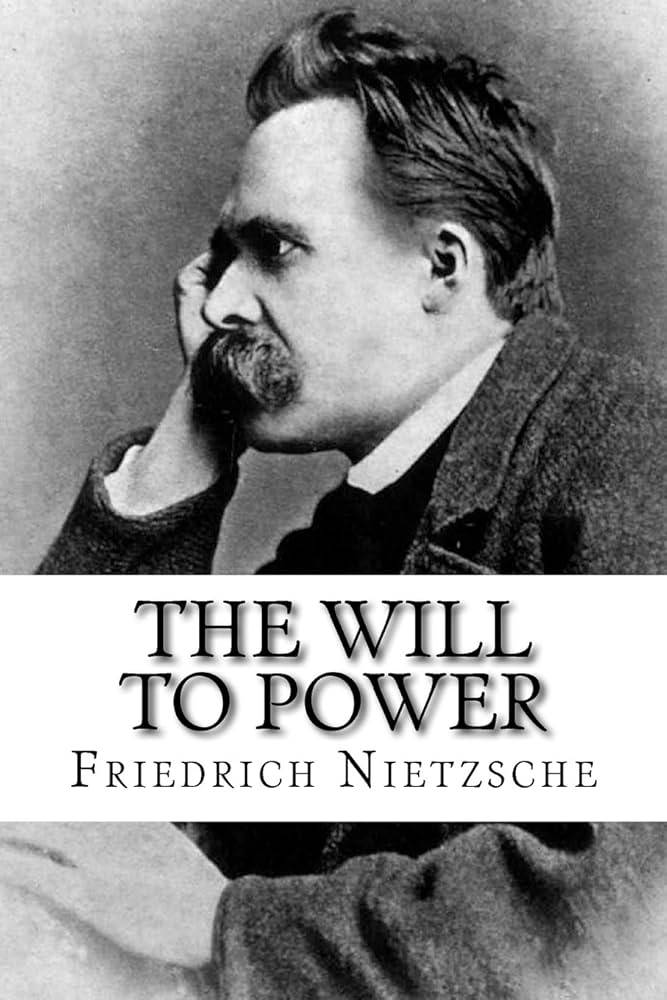
Maybe to the author’s surprise, some concepts developed in “Thus spoke Zarathustra” could be interpreted in nationalist terms. One of those is, of course, the will to power (der Wille zur Macht) which has been conceptualized mainly in the chapters “On the thousand and one goals” and “On self-overcoming” as well as in other works by Nietzsche. The will to power is the central concept of Nietzsche’s philosophy of life. It is described as “the unexhausted, procreative will of life”. Nietzsche’s view on the living things, however, is far from conventional: “But wherever I found the living, there I heard also the speech on obedience. Whatever lives, obeys.”
Indeed, in Nietzsche’s view the will to power is apolitical, it is rather a principle of all living things. Nietzsche’s orientation, as he himself insisted once more in “Ecce Homo”, was fundamentally anti-political. However, in principle the term “power” always implies a political dimension to the “will to power”. Therefore, a political and nationalistic interpretation of the concept is at least possible. Moreover, identity could directly be derived from the concept of the will to power. Identity could be defined as a quality or attribute of the will to power. By means of willing and seeking for power, identity is being generated and affirmed. Indeed, the concept of identity is not clearly specified in “Thus spoke Zarathustra”. The term identity (Identität) is not present in the text. However, drawing on Nietzsche’s view on morality – as expounded in his works – identity could be constructed as a moral value, as a representation of what he calls noble- or master-morality. If one could dare to develop Nietzsche’s understanding of the will to power one step beyond in the realm of politics, then “Identarians”, or identity-keepers, would rightfully be those people who are practising identity-based noble morality. Identarians can be opposed to identity-deniers, the preachers of slave morality leading to degeneration. Thus, the concept of identity reveals both a moral and a political dimension to it. In a sense, the will to power is a prelude to the concept of identity. With Nietzsche’s concept of the will to power theorizing about the will has reached its highest point. Tellingly, Heidegger regards the Western metaphysical tradition as having ended with Nietzsche’s “will to power,” which expresses the essence of the modern “will to will” (citation in Cleary, 2024). In this train of thought, identity as a novel concept based upon master-morality could be interpreted as a follow-up to the will to power.
By means of the concept of the will to power Nietzsche, maybe involuntarily but nevertheless successfully translates the metaphysical concept of will – so much beloved by German idealism – into a more practical, operational and policy-relevant concept. Therefore, the will to power – as a metapolitical concept which is closely related with identity – is certainly very relevant for a metapolitical identity-based project like Identaria.
It should also be noted that one of the three negative human characteristics defended by Nietzsche in the chapter “On the three evils” is closely linked with the will to power. This is the lust to rule (Herrschsucht) which was translated by Common as “passion for power”. The poetic description of the lust to rule reveals something very political, lofty and destructive:
“The lust to rule: the earthquake that breaks and breaks open everything worm-eaten and hollow; the rumbling, grumbling punisher that breaks open whited sepulchers;
The lust to rule: the terrible teacher of the great contempt, who preaches “away with you” to the very faces of cities and empires, until it finally cries out of them themselves, “Away with me!”
Nietzsche also employs the term “lion will” (Löwen-Wille) referring to a most intense will to power. As he says in the chapter “On old and new tablets” (section 16): “To gain knowledge is a joy for the lion-willed!”
I would not go into the difficult and delicate question about Nietzsche’s own identity. This refers to the broader problem of undesired identity. Nietzsche’s skepticism to and dissatisfaction with Germanness are well-known. In “Ecce Homo” he even claims Polish (noble) origins without any concrete evidence in this regard. He is a man who has called himself a good European but also “the Antichrist”, the man who has created the myth of the overman (without claiming explicitly to be one himself). Obviously, he has a complex “non-standard” identity and personality. Maybe, the most appropriate characterization for Nietzsche himself would be “a person looking for a new identity”. Having in mind this identity dynamics in the next installment I will examine the link between Zarathustra’s war-loving and Identaria.
Bibliography
Cleary, Collin. ‘Heidegger, Schelling, & the Reality of Evil Part 1’, Counter-Currents webzine, 13 September 2024. Available at : https://counter-currents.com/2024/09/heidegger-schelling-and-the-reality-of-evil-part-1/
Nietzsche, Friedrich. Thus spoke Zarathustra. A book for all and none, trans. Walter Kaufmann (Penguin Books, 1976).
Nietzsche, Friedrich. Ecce Homo, trans. Anthony M. Ludovici (Edinburgh and London: T. N. Foulis, 1911).
Nikolay Pavlov