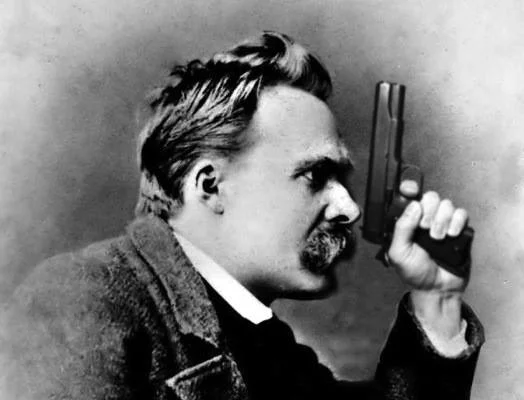
 Part 3 of Nietzsche’s “Thus spoke Zarathustra” and the Identaria project
As a peace-building project Identaria can draw on Zatarhustra’s war-loving attitude and radicalism in order to better understand the psychology of war-lovers. Zarathustra’s war-like attitude and his specific form of “intellectual militarism” is most clearly expressed in the chapter “On war and warriors”. The chapter – as most of Zarathustra – is written in a way that allows multiple interpretations. It starts with strong and paradoxical lines so typical for Nietzsche: “My brothers in war, I love you thoroughly; I am and I was of your kind. And I am also your best enemy. So let me tell you the truth!”
First, it should be made clear what kind of warriors Zarathustra addresses, namely “the warriors of knowledge” (“Kriegsmänner der Erkenntnis” in the original German text). The exact text says: “And if you cannot be saints of knowledge, at least be its warriors.”
The most striking parts of Zarathustra’s reflections on war are expressed in the following lines:
“You should love peace as a means to new wars—and the short peace more than the long. To you I do not recommend work but struggle. To you I do not recommend peace but victory. Let your work be a struggle. Let your peace be a victory!”
“You say it is the good cause that hallows even war? I say unto you: it is the good war that hallows any cause. War and courage have accomplished more great things than love of the neighbor.”
The ambiguity and depth of the text has given ground for very different interpretations of this chapter. For example, in the comments to his translation of Zarathustra Kaufmann interprets the war and victory in this chapter as related to seeking knowledge and “the victory of truth” (Kaufmann, 1976). But he acknowledges that some of the famous epigrams invite quotation out of context and could be used in an entirely different sense. Other authors have been inspired by Zarathustra’s war-loving attitude, including the understanding of war literally. Most notably, the famous Italian traditionalist and philosopher Julius Evola has based many of his essays written during the 1930s and 1940s (compiled under the name “Metaphysics of war”) on Nietzsche’s Zarathustra (Evola, 2011). Evola’s approach to the spiritual aspect of war, the heroic experience and his understanding of war as inner overcoming are deeply influenced by Nietzsche and specifically by the related texts on war, the overman and self-overcoming in “Thus spoke Zarathustra”. At the end of the chapter “On war and warriors” Zarathustra says: “man is something that shall be overcome.” Very importantly, Evola makes use of the term “warrior nation” which stands in the original title of the chapter in German in “Thus spoke Zarathustra” (“Vom Krieg und Kriegsvolke”) and which has not been adequately translated in English as “warrior nation (or people)” but simply as “warriors”.
Of course, Zarathustra’s reflections on war should not be overestimated. At least to some extent, the striking lines present an intellectual play with the interchangeability between peace and war. A much more ancient example is the Latin saying: “If you want peace, prepare for war.” This interchangeability between peace and war has been further developed by George Orwell in “1984” in the famous Party slogan “Peace is War”. The Ministry of War in “1984” was notably named “Ministry of Peace”.
Another important element of Zarathustra’s reflections on war is respect to the enemies: “You may have only enemies whom you can hate, not enemies you despise. You must be proud of your enemy: then the successes of your enemy are your successes too.”
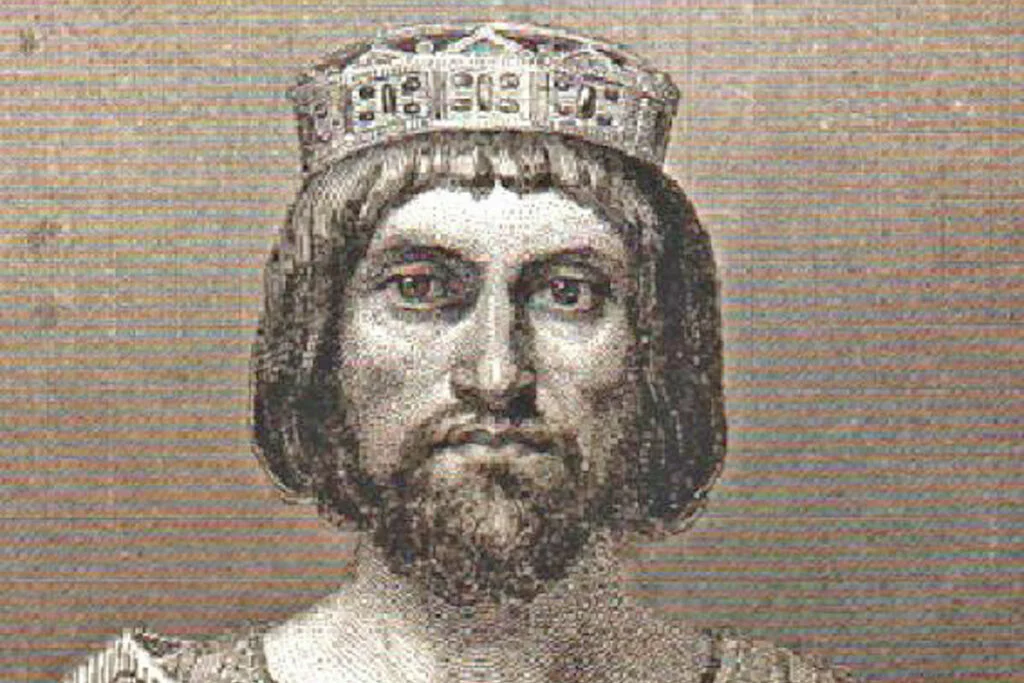
This respectful attitude to the enemies is one of the strengths of Zarathustra’s reflections on war. His approach closely resembles the mood and warlike spirit of the times between classical antiquity and the Early Middle Ages — a good example of which is the classical work “Panegyric to Theodoric” which was composed around the year 507 AD by Ennodius. Ennodius was deacon in Milan and then bishop of Pavia. In the “Panegyric” he congratulates the Gothic King Theodoric for his victories and political achievements; the work is an important source for the complex military and political situation and the raging civil war in the Roman empire. This is how Ennodius describes the Bulgars, one of the major enemies with whom Theodoric was at war (Ennodius, 1991: Section V and Section XII):
“This is the nation that before your arrival achieved all that it wanted; in which he who secured his rank by slaughtering his enemies gained honours; the battlefield establishes their birthright, because he whose weapon turns bloodier in combat is undoubtedly regarded more highly. Before this nation fought against you, for a long time it conducted its battles with a single skirmish and had never known anyone to resist it… These people previously believed that the world was theirs: now they recognize that this part of the world which you protect is completely shut off to them…Two nations were engaged in combat, to whom the thought of flight never occurred once fighting had started. Goths and Bulgars were mutually amazed to find each other similar, and, to see another among the human race withstanding them.”
Of course, there are many other classical and medieval historical accounts of wars between nations, maybe presented with more details. But the warrior spirit in Ennodius’ “Panegyric” is strikingly similar to the one delivered by Nietzsche in the chapter “On war and warriors” in “Thus spoke Zarathustra”.
Another related and inspiring thing for some is Zarathustra’s radicalism which is beautifully expressed in the chapter “On the thousand and one goals” with the words: “Whoever must be a creator always annihilates”. What many nationalist souls and projects like Identaria find inspiring in Nietzsche’s work is also that — although in an abstract way — he highlights “a way to greatness”, which is in stark contrast with the dullness of everyday life. Closely related with this are the mystical elements in Zarathustra which will be examined in the next installment.
Bibliography
Ennodius, Magnus Felix. Panegyric to Theodoric the Great, trans. Barbara S. Haase (Ottawa: University of Ottawa, 1991).
Evola, Julius. Metaphysics of War. Battle, Victory and Death in the World of Tradition, ed. John B. Morgan (Arktos Media Ltd, 2011).
Kaufmann, Walter. ‘Introduction and editor notes’, The portable Nietzsche (Penguin Books, 1976).
Nietzsche, Friedrich. Thus spoke Zarathustra. A book for all and none, trans. Walter Kaufmann (Penguin Books, 1976).
Nietzsche, Friedrich. Also sprach Zarathustra (Kehl: SWAN Buch-Vertrieb GmbH, 1994).
Nikolay Pavlov