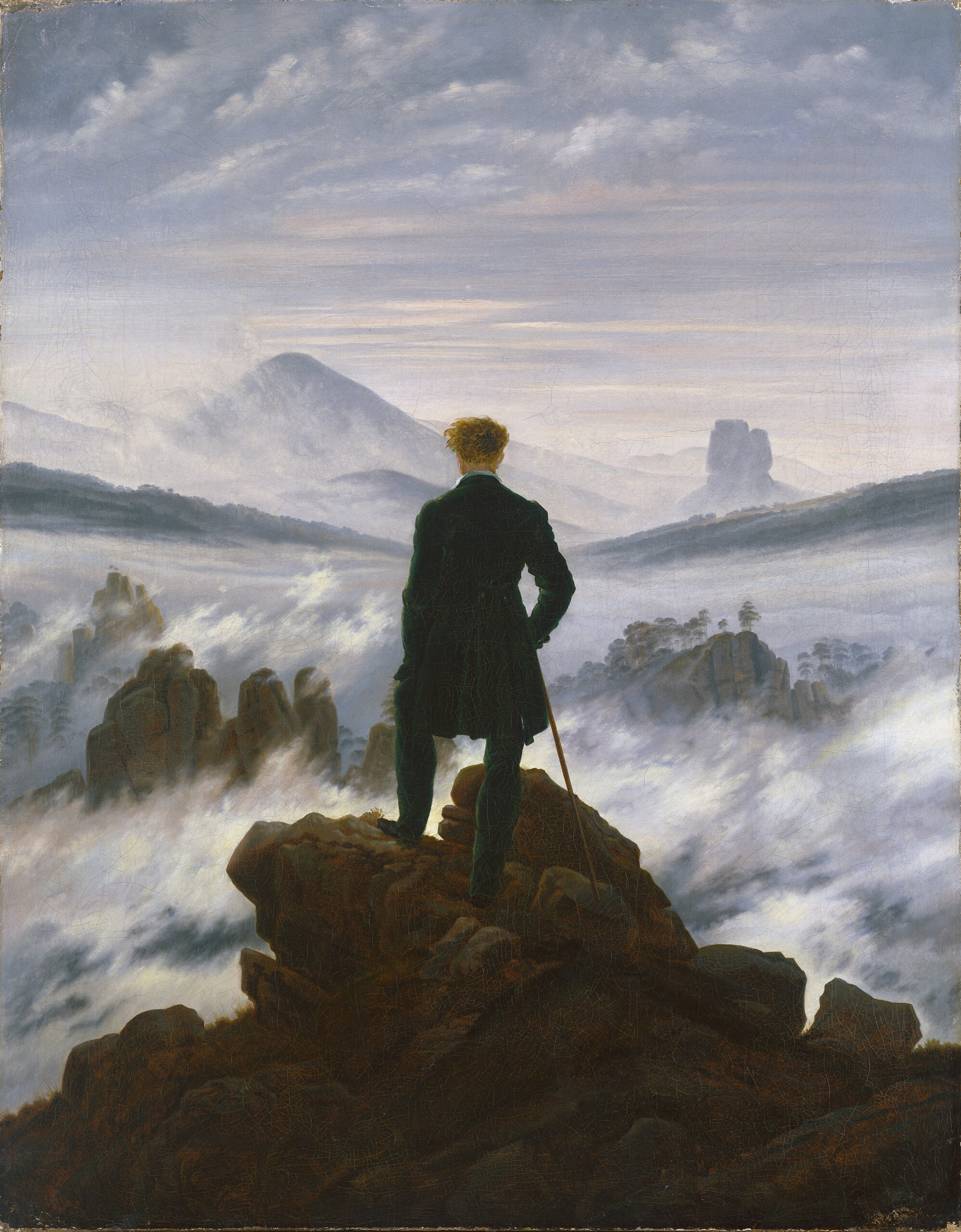
Part 5 of Nietzsche’s “Thus spoke Zarathustra” and the Identaria project
In principle, the concept of a homeland is an inherently nationalist concept. It is very relevant for the Identaria project as a project aimed at developing the concept for a European nationalist homeland. What the Identaria project shares with Nietzsche’s philosophical and poetic project in Zarathustra is the feeling of homelessness and the quest for a new homeland. Nietzsche’s highly original and deeply psychological approach to the homeland concept is developed in the chapters “On the land of education”, “The return home”, “The shadow” and “Upon the blessed isles”. In the chapter “On the land of education” he states: “From all mountains I look out for fatherlands and motherlands. But home I found nowhere; a fugitive am I in all cities and a departure at all gates.”
At the end of the same chapter, without much preparation or further explanations Nietzsche refers to “my children’s land” (Meiner Kinder Land): “Thus I now love only my children’s land, yet undiscovered, in the farthest sea: for this I bid my sails search and search.” The idea of “your children’s land” (“euer Kinder land”) is further developed in the chapter “On old and new tablets” (Section 12): “Your children’s land shall you love: this love shall be your new nobility — the undiscovered land in the most distant sea. For that I bid your sails search and search.” In this passage the idea of “our children’s land” is directly linked with Nietzsche’s idea of a “new nobility” – both of which fit very well the concept of Identaria.
The chapter “The return home” is actually a praise of loneliness. It starts with the line: “O solitude! O my home, solitude!” Homelessness and the nomadic spirit are the main characteristics of Zarathustra’s shadow as revealed in “The shadow” which is one of the most psycho-analytical chapters. This is how Zarathustra’s shadow describes himself:
“I am a wanderer who has already walked a great deal at your heels — always on my way, but without any goal, also without any home; so that I really lack little toward being the Eternal Jew, unless it be that I am not eternal, and not a Jew. How? Must I always be on my way? Whirled by every wind, restless, driven on? O earth, thou hast become too round for me!”
And, later on in the chapter, the shadow thus explains the eternal search for home:
“Do I have a goal any more? A haven toward which my sail is set? A good wind? Alas, only he who knows where he is sailing also knows which wind is good and the right wind for him. What is left to me now? A heart, weary and impudent, a restless will, flutter-wings, a broken backbone. Trying thus to find my home — O Zarathustra, do you know it? — trying this was my trial; it consumes me. ‘Where is — my home?’ I ask and search and have searched for it, but I have not found it. O eternal everywhere, O eternal nowhere, O eternal — in vain!”
Identaria is an attempt to meet the demand for a homeland for European patriots and identity-keepers. In Zarathustra this possible dream-land are the blessed isles. This is how the blessed isles are described in the chapter under the same name: “It is autumn about us, and pure sky and afternoon. Behold what fullness there is about us! And out of such overflow it is beautiful to look out upon distant seas.”
In addition, Nietzsche outlines the sacred geography of Zarathustra’s “realm” with the following main elements:
– the town called “The Motley Cow” (“die bunte Kuh”). In the chapter “On apostates” Zarathustra refers to “the town which he loved and which is also called The Motley Cow”.
– the blessed isles;
– the isle of tombs;
– the mountains where Zarathustra “enjoyed his spirit and his solitude, and for ten years did not tire of it.”
– Zarathustra’s cave in the mountains
– the valley “Snakes’ Death” which is a realm of death where Zarathustra meets the ugliest man, “the murderer of God”.
The sacred geography of Zarathustra’s realm must be taken into account in the development of Identaria as a geopolitical project with strong mystical aspects. At the same time, the European nationalist homeland should be developed as “our children’s land” that will provide the security, prosperity and the future of European identity keepers and their descendants. An essential part of the making of Identaria is also the structuring of Identarian society which will be examined in the next installment.