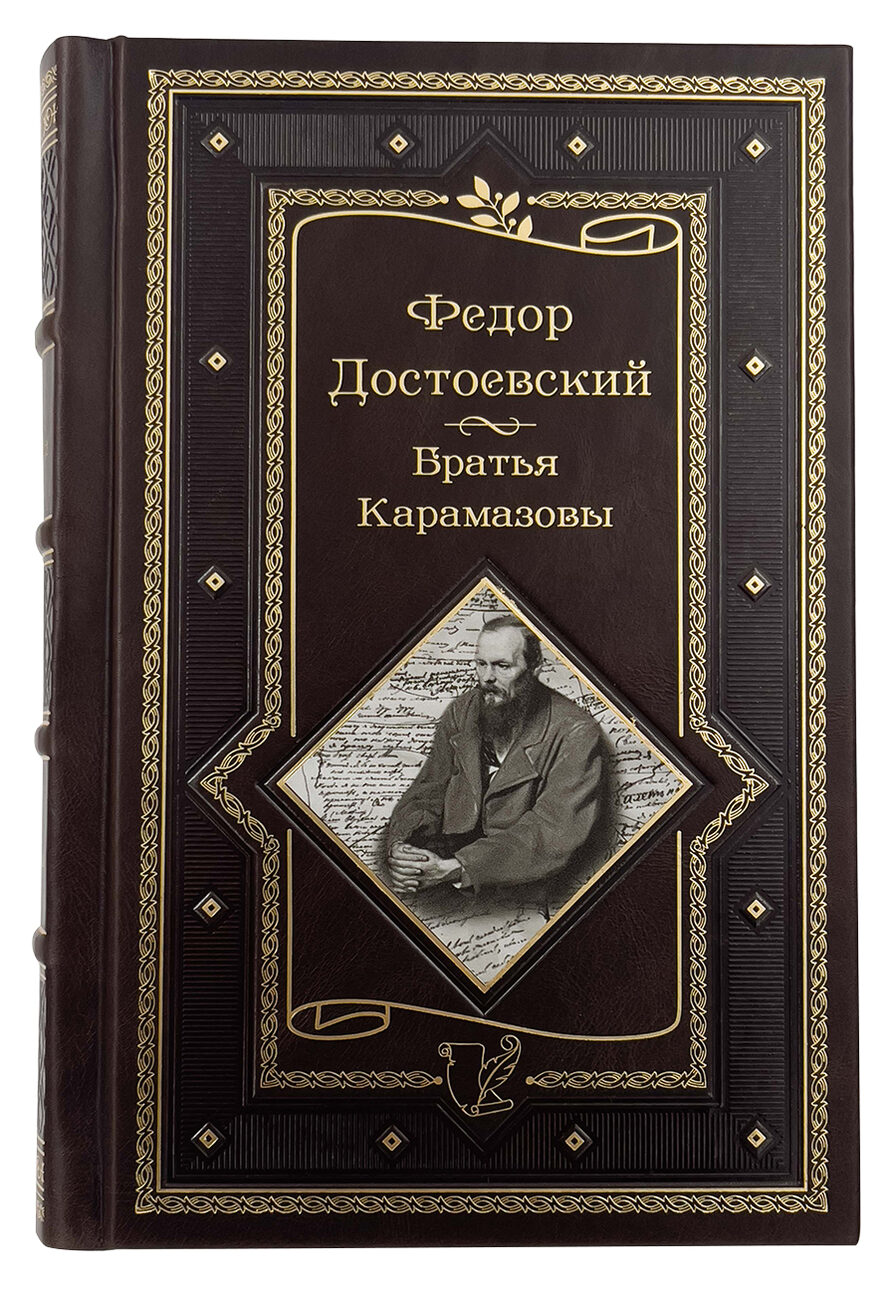
 In November 1880 the great Russian writer Fyodor Dostoevsky published his last novel “The Brothers Karamazov”, his magnum opus and arguably one of the greatest pieces of literature ever written. In this novel Dostoevsky explores existential themes such as the existence of God, human suffering, atheism and nihilism and dives deep into the human psyche, developing complex characters that contemplate the meaning of life.
One such character is Pavel Fyodorovich Smerdyakov, the son of “Reeking Lizaveta” who is rumored to be the illegitimate son of the despicable Fyodor Pavlovich, the father of the brothers whose name the novel bears. Smerdyakov is a man, filled with hatred towards everyone and everything, and most of all towards his own identity. This self-loathing leads him to commit terrible acts and set in motion events that leave a grave mark on all characters. Smerdyakov’s self-hatred, nihilism and absolute atheism bring about a cataclysm so spectacular that it fundamentally changes the Russian town where the novel plays out.
Smerdyakov’s hatred of his own identity is most clearly displayed in his views on Russia and the Russians as a whole. He states: “I hate all Russia” and “in 1812 there was a great invasion of Russia by Napoleon, first Emperor of the French, father of the present one, and it would have been a good thing if they had conquered us”. He whole-heartedly detests being Russian, he considers his own people to be this unintelligent, uncivilized and uncultured mass of peasants that ought to be conquered and erased as a nation. This hatred of the Russian people is most probably rooted in the resentment he feels toward his mother “Reeking Lizaveta” and his (likely) father, the devious Fyodor Pavlovich.
When directed outwards Smerdyakov’s self-hatred turns into hatred of everyone and everything as the narrator notes: “But he seemed to have as much contempt for the female sex as for men”. Furthermore, he develops extreme and even fanatical nihilistic and atheistic views of the world. If all one feels is resentments, with no sentiment of hope, love or affection, it is no surprise that he believes that life is just a meaningless struggle. These uttermost pathetic opinions on the world lead him to commit a most terrible act that destroys an already dysfunctional family, sentences a man, that didn’t have anything to do with the sinister crime, to a terrible fate in the wastelands of Siberia and obliterates another one’s psyche.
At the end of the novel Smerdyakov confesses to murdering his father Fyodor Pavlovich Karamazov in a gruesome bid to put an end to his own identity and bloodline. The whole operation is carefully calculated to frame his half-brother Dmitry as the perpetrator. Motivated by hatred of his bloodline, and, more broadly of his identity Smerdyakov destroys the life of one of his brothers. Moreover, he disturbingly convinces his oldest brother, Ivan Fyodorovich, that he is the reason their father is dead, or as Smerdyakov himself tells Ivan: “since you knew of the murder and charged me to do it” and “It was only with you, with your help, I killed him”. The skillful psychological manipulation employed by Smerdyakov essentially triggers Ivan’s mental illness and leads to his final mental breakdown. This is evidenced by an ominous episode in which the Devil himself appears before Ivan, leaving the man a mere shell of his former self.
Finally, Smerdyakov commits suicide, without revealing that he is the real killer. The only purpose in life he saw was destroying his own identity. After accomplishing his only mission, he is no longer willing to continue his miserable existence. Killing himself was only the last step of his plan to destroy the typically Russian Karamazov family identity. His suicide wasn’t dictated by remorse or guilt, but rather by pure self-hatred.
It is only Alyosha, the youngest of the three Karamazov brothers who is not directly harmed by Smerdyakov’s actions. He, however, essentially loses all of his family, which he loves with a saint-like passion and forgiveness. Perhaps even this is a part of Smerdyakov’s masterplan, for Alyosha desperately desires the redemption of his sinful family. This way, he is left without the closure he so arduously wants, and holds an emotional monologue in which the Christian soul expresses the possibility of everyone, even himself, the unblemished Alyosha, becoming “bad”. God, nonetheless, gives Alyosha once again an almost naïve optimism, through which he finds the strength to declare solemnly: “How good life is when one does something good and just!”, ending the novel on a good note.
Smerdyakov’s extreme self-hatred leads to terrible consequences for everyone around him. In his misanthropic quest to destroy the Karamazov family identity, he kills himself and his father, leaves his half-brother Ivan a lunatic and practically sends his other half-brother to Siberia. This shows the deadly danger of self-hatred. The story of the brothers Karamazov, however, shows that even in critical times, there are forces, perhaps supernatural, that render identity hardly destructible. We could speculate that the future, through Alyosha, most probably holds the redemption of the Karamazov bloodline.